Orthopedic recovery is a complex process that extends far beyond the surgery itself. Many patients believe rehabilitation starts only with physical therapy. In reality, it begins immediately after the operation—with the first wound check, systematic pain monitoring, and consistent infection prevention. Structured aftercare is essential to avoid complications and support optimal healing.
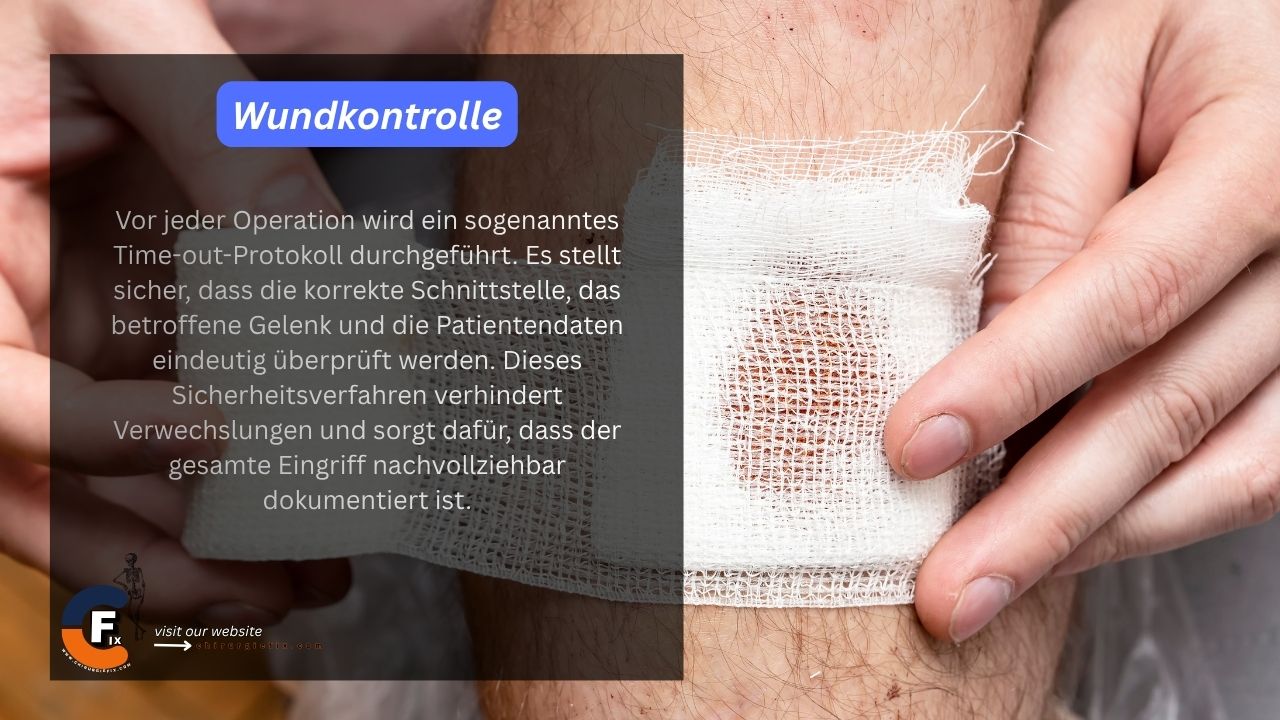
Right after the procedure, the incision is regularly examined for typical signs of inflammation. Nursing staff document the condition of the surgical wound every eight hours. They specifically look for redness, swelling, fluid drainage, or increased temperature. These standardized wound checks help detect complications such as infections or secondary bleeding early.
Before every surgery, a time-out protocol is performed. This ensures the correct incision site, the affected joint, and patient details are clearly verified. This safety procedure prevents mix-ups and ensures the entire intervention is documented in a traceable manner.
After surgery, if you experience severe redness, increasing swelling, or fever, you must inform the medical team immediately. This allows wound healing disturbances and infections to be treated promptly.
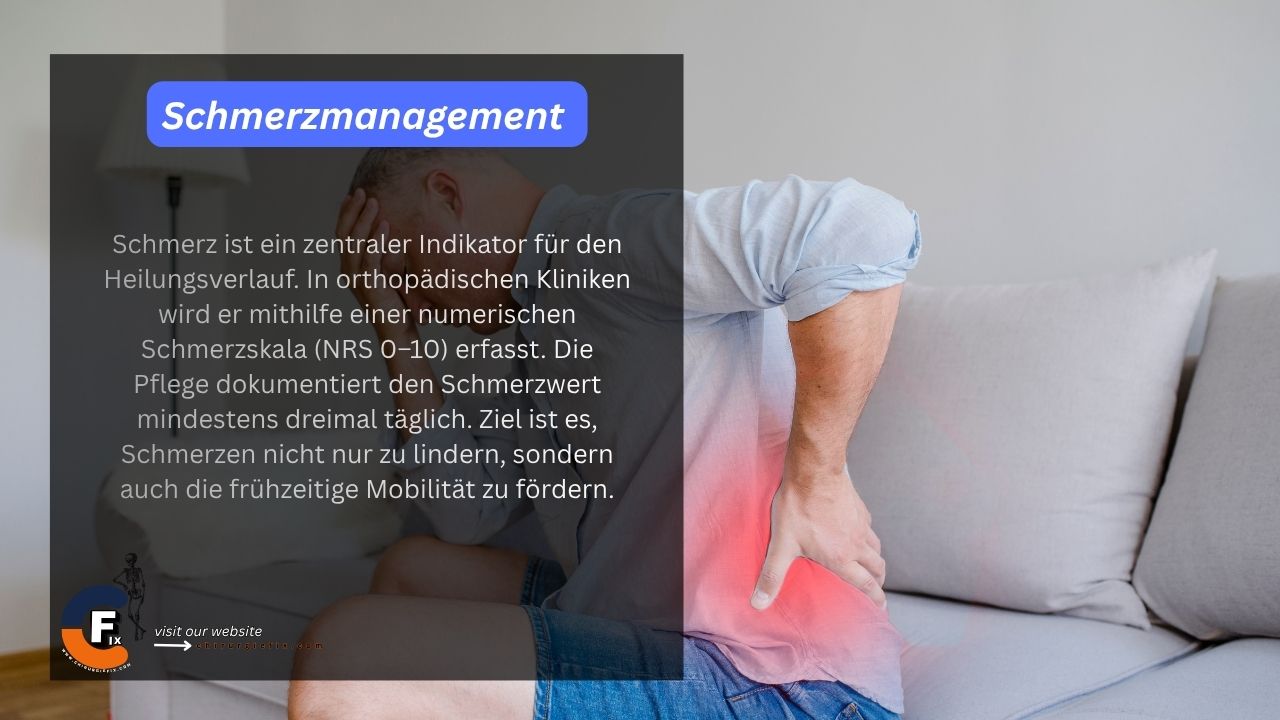
Pain is a key indicator of the healing process. In orthopedic clinics, it is assessed using a numeric pain scale (NRS 0–10). Nursing staff document the pain score at least three times a day. The goal is not only to relieve pain but also to encourage early mobility.
An important part of aftercare is the pain-to-move test. Here, the patient performs small guided movements to prevent adhesions and restricted mobility. If severe pain or blockages are detected, imaging checks such as X-rays or an MRI may be necessary on the third and seventh day after surgery.
Effective pain management not only improves well-being but also reduces the risk of chronic pain and thrombosis from lack of movement.
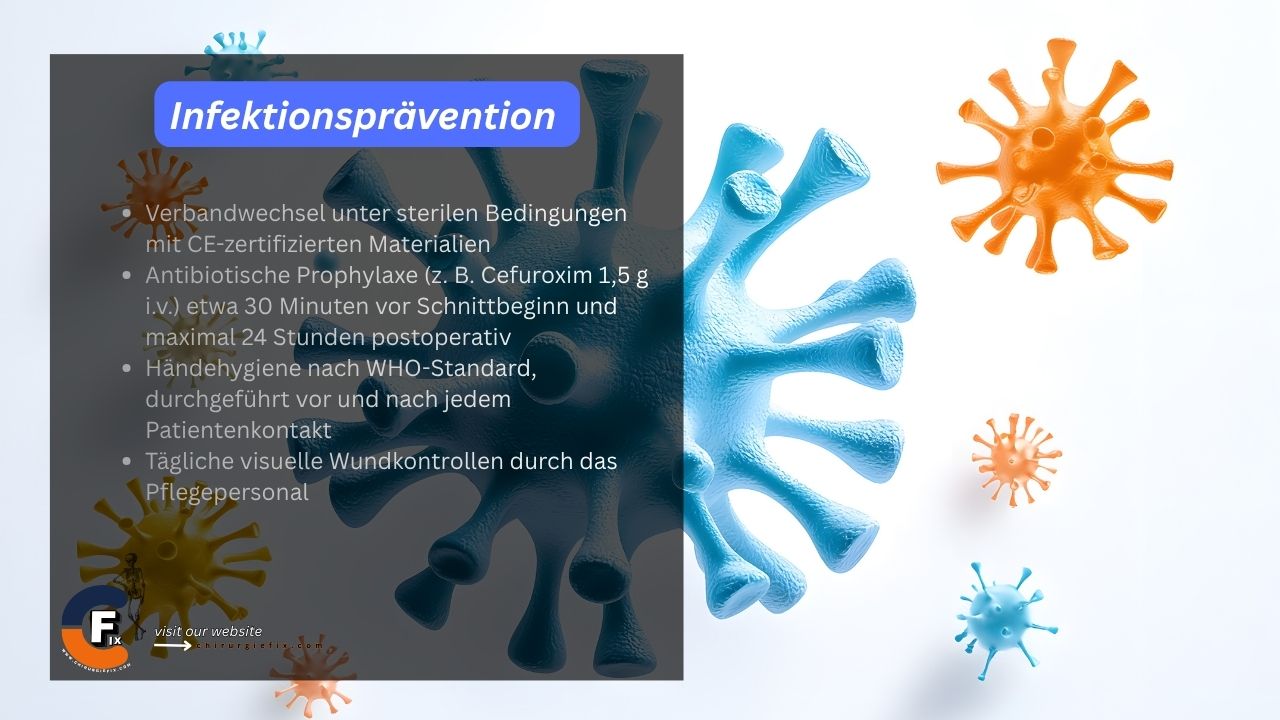
Postoperative infections are one of the biggest challenges in orthopedic surgery. The risk is particularly high for joint surgeries, implants, or endoprostheses. This is why strict hygiene standards apply:
These measures significantly reduce the risk of wound infections, sepsis, and implant failure. Studies show that standardized infection protocols can reduce the rate of nosocomial infections by up to 60%.

Alongside medical care, upholding patient rights is an essential part of recovery. Every patient is entitled to:
If data protection violations or treatment errors occur, patients can contact the State Medical Association or the Independent Patient Counseling Service Germany (UPD). In serious cases, a lawyer specializing in medical law can help enforce claims for compensation.
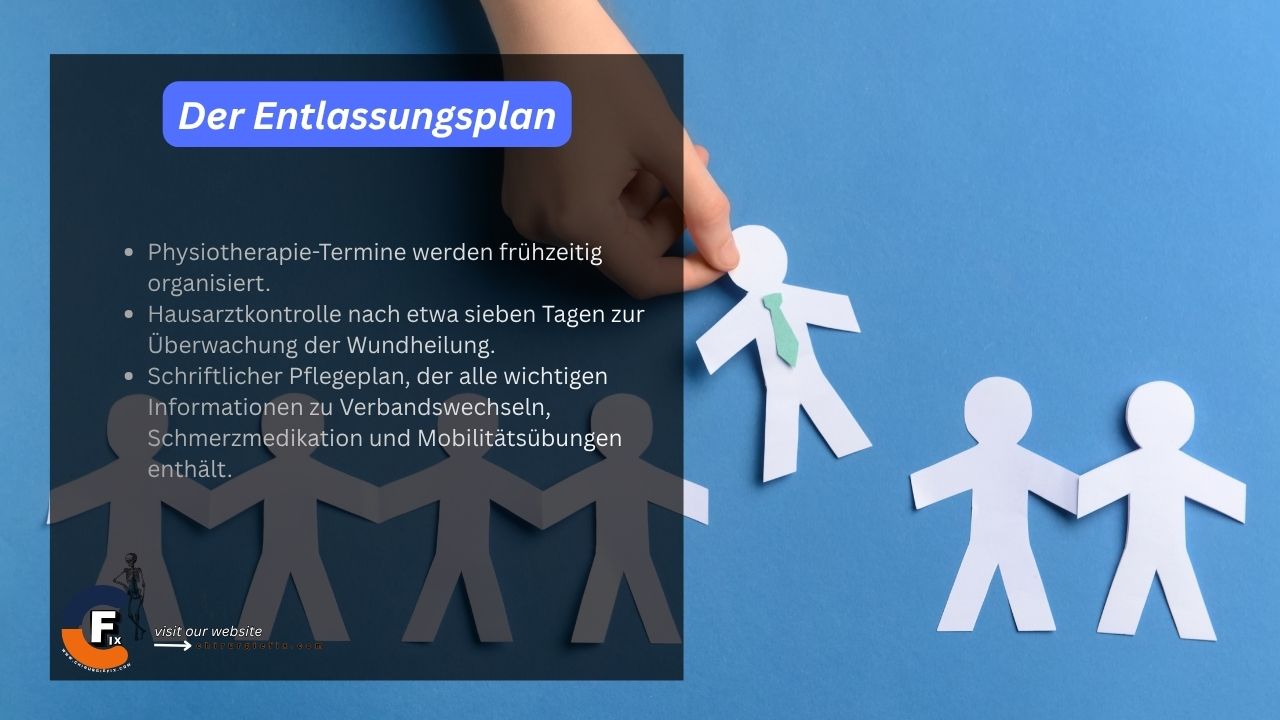
A structured discharge plan is the bridge between inpatient treatment and outpatient aftercare. Preparations begin as early as the third day after surgery:
Effective discharge management ensures therapy continues seamlessly. Patients also receive an emergency number so the clinic is reachable around the clock—especially for warning signs like increasing redness, swelling, or suspected thrombosis.
The postoperative phase is crucial for long-term healing success. Taking wound checks, pain management, and infection protection seriously creates the best conditions for a complication-free orthopedic recovery. At the same time, patients should know their rights and actively participate in their recovery. With a structured discharge plan and professional care, the transition back to everyday life is safe and sustainable.
Analgesics: Pain-relieving medications that work centrally or peripherally depending on their mechanism of action.
Antibiotic Prophylaxis: Preventive administration of antibiotics to avoid postoperative infections.
Endoprosthesis: An artificial joint replacement that remains permanently in the body.
Nosocomial Infection: An infection acquired in a hospital, often caused by resistant germs.
Pain-to-Move Test: A functional test to assess pain response during movement after surgery.
Thrombosis: The formation of a blood clot in a vein that obstructs blood flow.
Time-Out Protocol: A safety step in the operating room that confirms correct patient identity, surgical site, and procedure before the incision.