Anterior approach to the pubic symphysis

Introduction

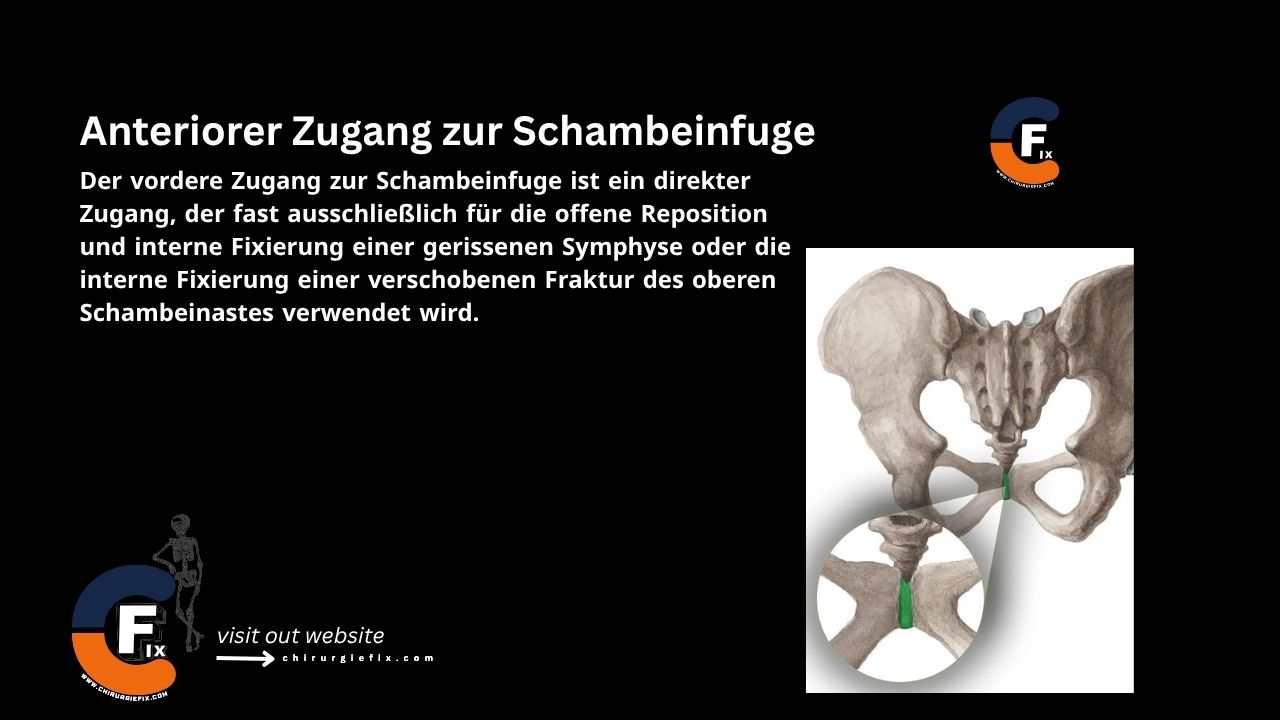
The anterior approach to the pubic symphysis is a direct surgical exposure used almost exclusively for open reduction and internal fixation (ORIF) of a ruptured symphysis or for internal fixation of a displaced superior pubic ramus fracture. Additional applications include tumor biopsy and the management of chronic osteomyelitis.

Patient Positioning

Place the patient in the supine position on the operating table.

Landmarks and Incision

Landmarks

  • The superior pubic ramus.
  • The pubic tubercle.
  • The pubic symphysis is only palpable as a gap when a rupture is present.

Incision

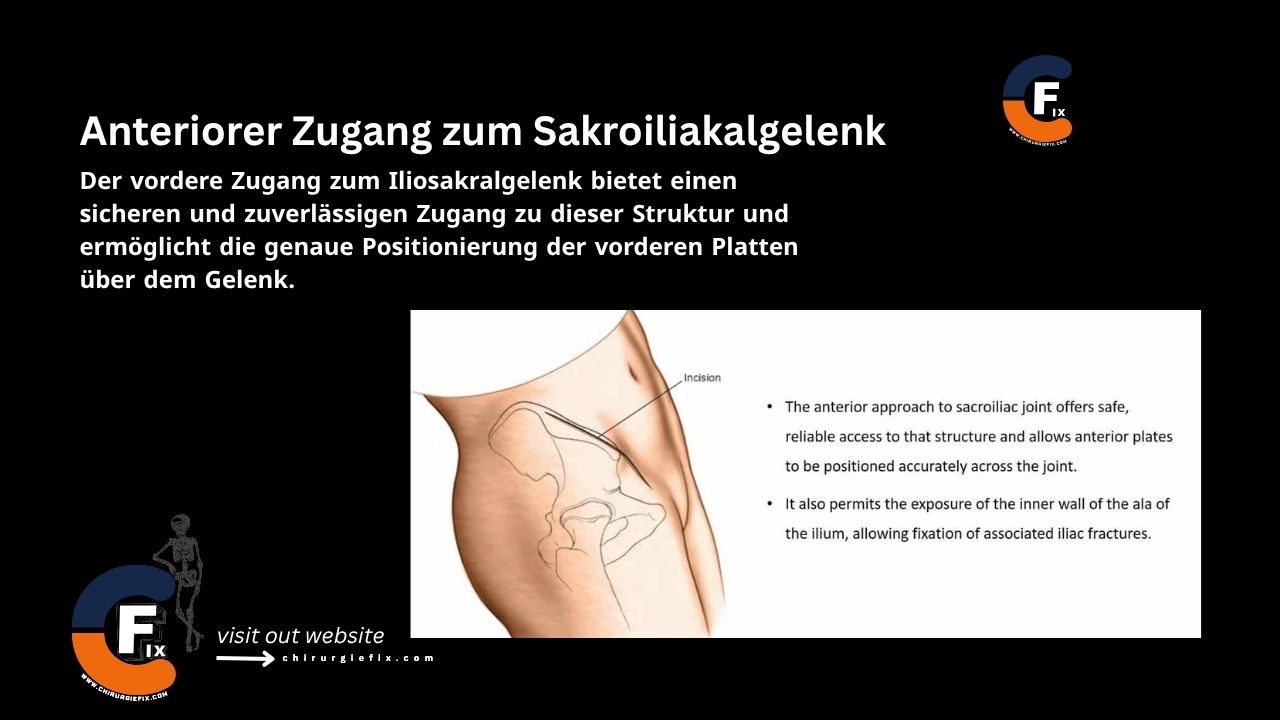
Make a 15 cm curved incision along the skin crease, centering it approximately 1 cm above the pubic symphysis.

Internervous Plane

There is no true internervous plane for the anterior approach to the pubic symphysis. Although the rectus abdominis muscles are divided through this approach, they receive segmental innervation and are therefore not denervated.

Superficial Dissection

  • Incise the subcutaneous fat along the skin incision and deepen the incision down to the anterior layer of the rectus sheath.
  • Identify, ligate, and divide the superficial epigastric artery and vein, which cross the operative field from below.
  • Divide the rectus sheath transversely, approximately 1 cm above the pubic symphysis.
  • The two rectus abdominis muscles are now visible.
  • In most cases of a ruptured pubic symphysis, one of these muscles has already avulsed from its attachment at the symphysis.
  • Divide the remaining muscle a few millimeters proximal to its bony attachment.

Deep Dissection

  • Retract the cut edges of the rectus abdominis muscles superiorly to expose the symphysis and the pubic crest.
  • If access to the posterior aspect of the symphysis is required, gently push the bladder away from the posterior surface of the bone using a finger or a swab.
  • Palpating the posterior surface of the pubic body helps determine the correct direction for screw insertion.
  • This dissection is usually straightforward unless adhesions have formed due to a bladder injury. Such adhesions can make opening this potential space (the preperitoneal space of Retzius) difficult.
  • The pubic symphysis and superior pubic ramus are now adequately exposed for internal fixation.

Approach Extension

The anterior approach to the pubic symphysis can be extended laterally to expose the entire anterior column of the acetabulum and the inner wall of the ilium.

Dangers

Structures at risk during an anterior approach to the pubic symphysis include:

  1. The Bladder:
    • The bladder may have been damaged during the initial trauma. In this case, adhesions form between the injured bladder and the posterior aspect of the pubis.
    • Mobilization of the Retzius space can therefore lead to an inadvertent bladder rupture.
    • If fixation is being considered in the presence of a urological injury, the procedure is best performed in collaboration with an experienced urological surgeon.

References

  • Book: “Surgical Exposures in Orthopaedics” – 4th Edition

Still to read...