Hallux valgus taping has proven to be an effective conservative treatment method which, when applied correctly, can alleviate symptoms and possibly slow the progression of the deformity.
Hallux valgus, commonly known as bunion, is one of the most frequent forefoot deformities encountered in clinical practice. This condition affects approximately 23% of adults aged 18 to 65 and up to 35% of those over 65, with a significantly higher prevalence in female patients.
The first metatarsophalangeal (MTP) joint of the big toe is subjected to significant biomechanical stress during walking, particularly in patients with hallux valgus. Valgus stress leads to lateral deviation of the big toe and medial displacement of the first metatarsal head, resulting in joint subluxation and progressive deformity. Taping techniques address this pathomechanics by medially supporting the proximal phalanx while counteracting the abduction forces that exacerbate the condition. The application generates a corrective force that temporarily realigns the joint and reduces pressure on the medial eminence during weight-bearing activities.
Hallux valgus taping is primarily indicated for patients experiencing pain in the first metatarsophalangeal (MTP) joint due to a valgus sprain. The technique serves as both a diagnostic and therapeutic intervention, allowing clinicians to assess the potential benefits of mechanical realignment before considering more invasive options. Taping is particularly valuable for patients with mild to moderate deformities, active inflammation of the medial eminence, or those seeking relief from certain activities that exacerbate symptoms. The procedure aims to alleviate symptoms and facilitate comfortable walking, while consistent application may aid in the correction of minor deformities.
Successful implementation requires specific materials: adhesive spray to improve tape adhesion, 5 cm of stretch tape for the primary corrective component, and 2.5 cm of rigid tape to anchor and secure the application. Preparing these materials before patient contact ensures efficient application and enhances the patient experience. The adhesive spray creates a sticky surface that prevents premature tape detachment during activity, while the combination of elastic and rigid components provides both corrective force and structural support to maintain alignment during weight-bearing activities.
The optimal patient position for hallux valgus taping is supine, with the foot extended over the edge of the support surface, allowing full access to the forefoot and midfoot. The application begins with a light spray of water on the foot to improve the adhesive properties of the tape. The practitioner then applies the 5 cm long stretch tape and secures it to the medial side of the proximal phalanx of the big toe, distal to the joint line. This serves as the primary corrective component, as it provides the medial force to counteract the valgus positioning.
The next step involves anchoring the tape with a 2.5 cm thick strip of rigid adhesive tape around the phalanx to prevent slippage during movement. The crucial part of the technique is to pull the tape backward and around the heel, continuing along the outside of the foot, under the arch, and around the midfoot before ending under the arch. This creates a continuous force vector that maintains the corrective position throughout the gait cycle. The application concludes with a final strip of rigid adhesive tape to secure the entire setup and prevent premature release during activity. Light Hallux Taping
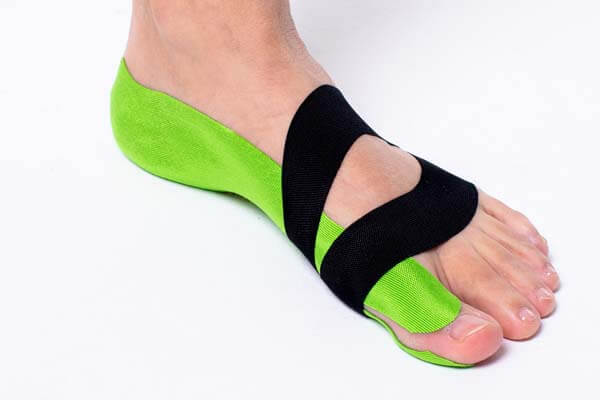
After applying hallux valgus taping, the practitioner should have the patient walk to check for comfort and function. This assessment serves several purposes: it confirms sufficient symptom relief, ensures that the tape does not impede normal gait mechanics, and allows for immediate adjustments if necessary. The primary contraindication for this taping technique is excessive tape tension in the initial stages, as this can lead to excessive abduction of the big toe, potentially causing new symptoms or exacerbating existing discomfort. Furthermore, patients with known tape allergies, sensitive skin, or peripheral vascular disease require careful consideration and possible modification of the technique.
Teaching patients how to apply hallux valgus taping themselves is a crucial component of successful treatment. The patient is best positioned to judge the amount of abduction needed for comfort during daily activities and adjust the application accordingly. The corrective force can be gradually increased over time as tolerance improves, potentially enhancing the mechanical effect without causing discomfort. Patient education should cover proper skin preparation, tape application technique, duration of wear, and signs indicating the need for removal or re-evaluation by a professional.
Research suggests that when applied correctly and consistently, hallux valgus taping can reduce pain levels in symptomatic patients by 40–60%. Studies have shown that pressure distribution in the forefoot improves immediately during gait analysis, reducing stress on the first metatarsophalangeal (MTP) joint and the medial eminence. While taping does not permanently correct structural deformities, longitudinal studies indicate that consistent application over a period of 6–12 months can slow the rate of progression compared to untreated controls. The technique is particularly effective when combined with appropriate shoe modifications and targeted exercises to strengthen the foot muscles.
Hallux valgus taping should be considered part of a comprehensive management approach. Clinicians should consider combining this technique with other interventions, including shoe modifications, custom orthotics, physical therapy, and anti-inflammatory measures. Taping provides immediate symptom relief, while longer-term interventions address the underlying biomechanical factors. Regular reassessments allow clinicians to adjust the approach based on patient response and deformity progression, ensuring optimal outcomes through personalized treatment pathways.
Hallux valgus taping represents a valuable, non-invasive intervention for treating pain in the first metatarsophalangeal (MTP) joint associated with bunion deformity. When applied correctly and integrated into a comprehensive treatment plan, it offers significant symptom relief and can influence the progression of the deformity. Clinicians should consider this approach for suitable candidates, particularly those with mild to moderate deformities who are seeking conservative treatment options. The technique's relative simplicity, cost-effectiveness, and patient-centered approach make it a worthwhile addition to the clinical skills of any physician treating foot and ankle conditions.