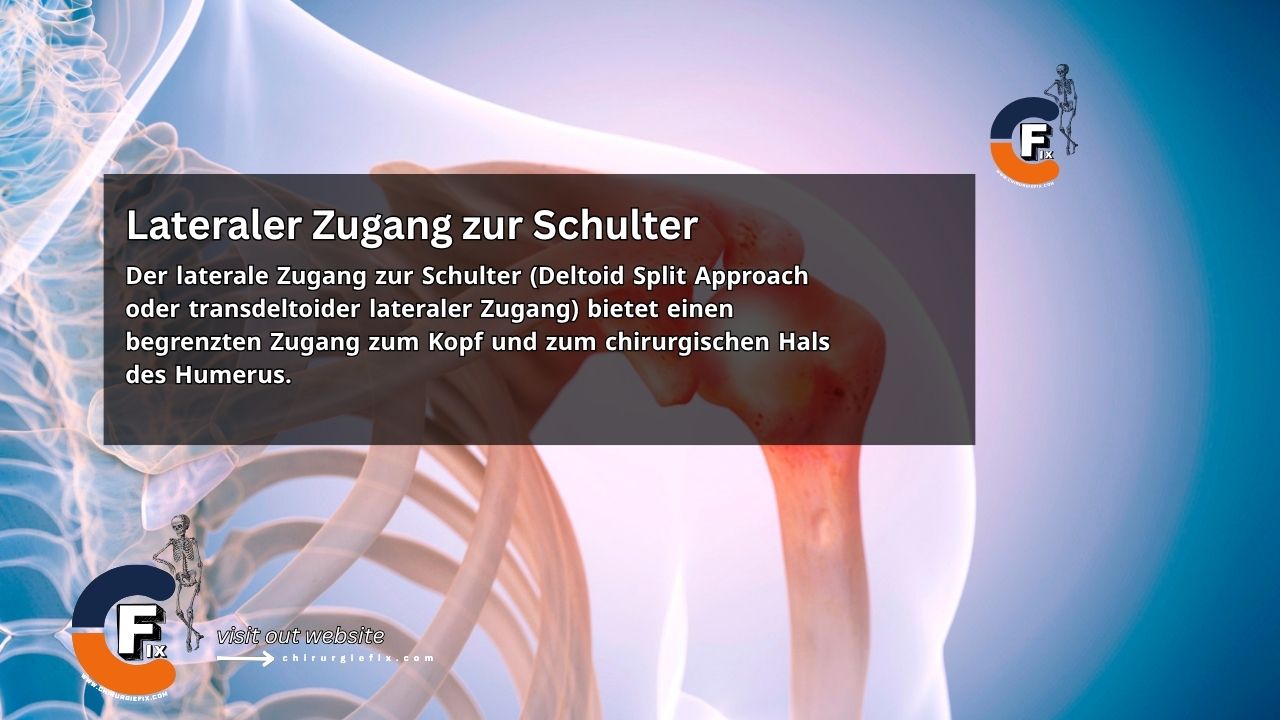
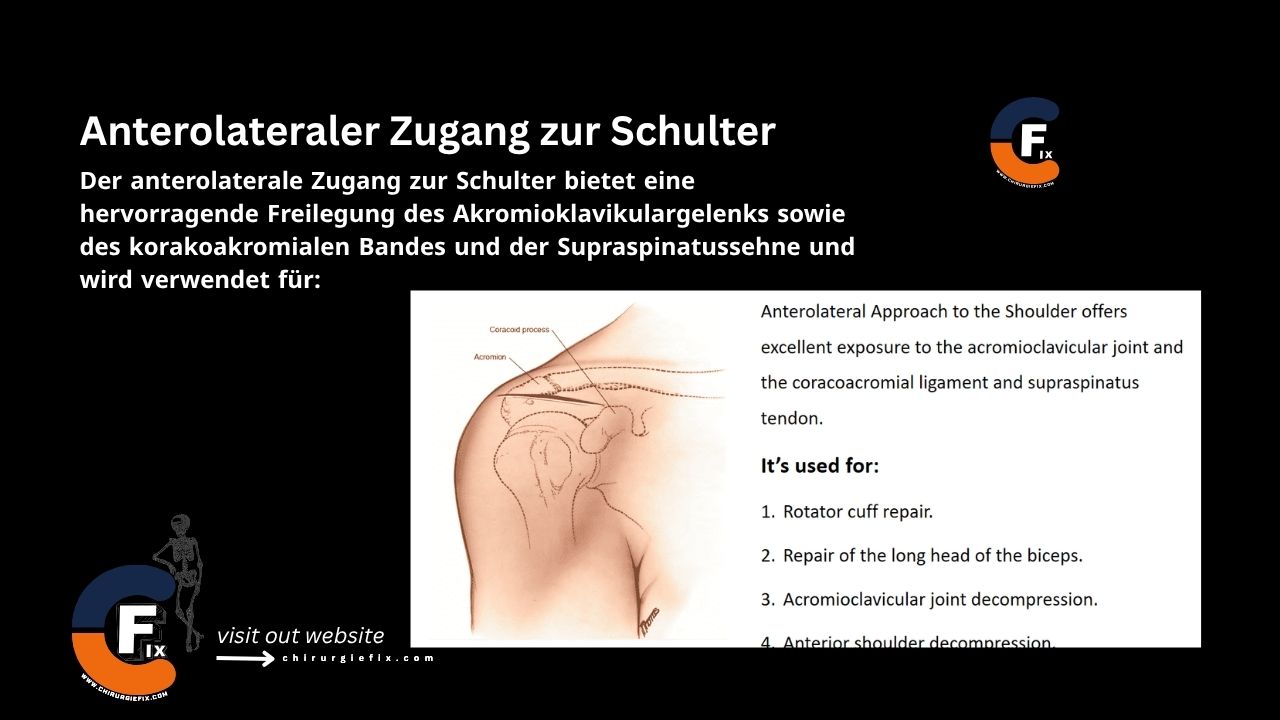
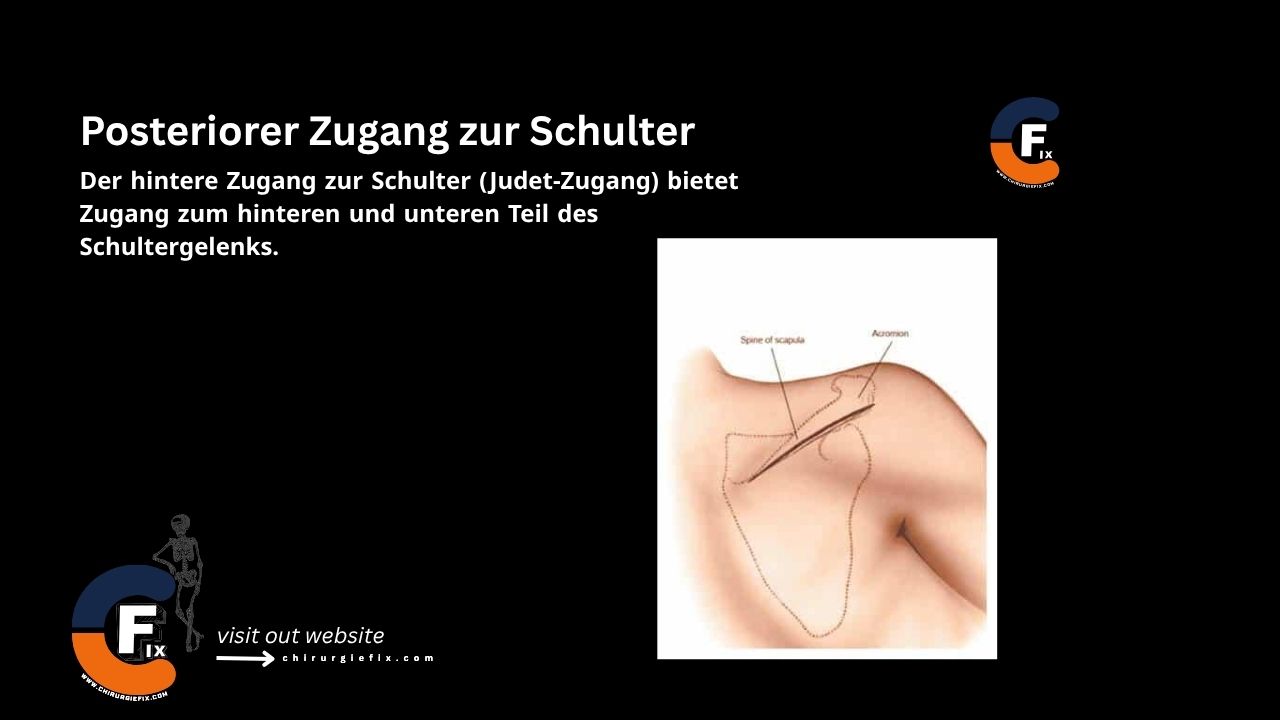
The lateral approach to the shoulder (also known as the deltoid split approach or transdeltoid lateral approach) provides limited access to the humeral head and the surgical neck of the humerus.
The lateral approach to the shoulder is used for:
In a comparative study of the lateral deltoid-split approach versus the deltopectoral approach for treating proximal humerus fractures, the lateral deltoid-split approach provided superior reduction of the humeral head and tuberosity fragments.
There is no true internervous plane in the lateral approach to the shoulder, as the deltoid muscle is split along its fibers.
The lateral approach to the shoulder is not a classic extensile approach, as it is limited distally by the course of the axillary nerve across the deep surface of the deltoid muscle.
Proximal Extension:
Distal Extension:
Distal extension is possible by creating a separate deltoid split distal to the axillary nerve.
During the lateral approach to the shoulder, the following structures are at risk:
Axillary Nerve: