Anterior approach to the iliac crest

Introduction

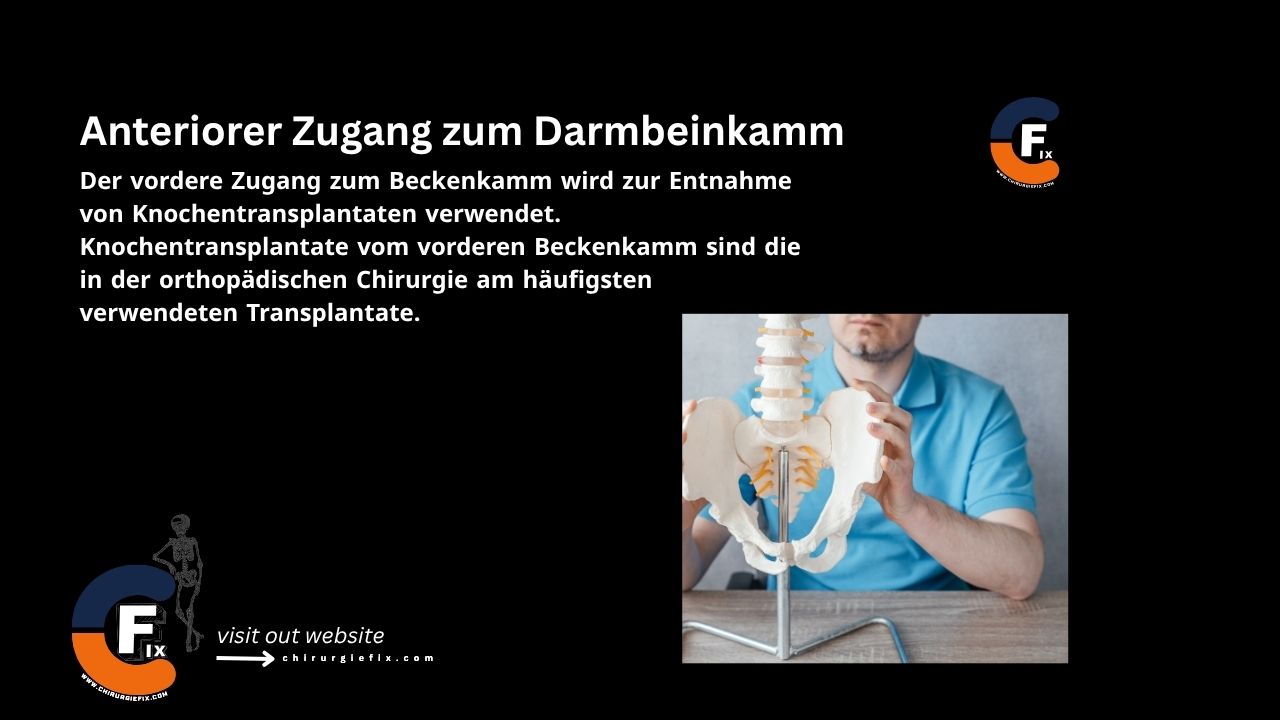
The anterior approach to the iliac crest is used for harvesting bone grafts. Anterior iliac crest bone grafts are the most commonly used grafts in orthopedic surgery.

Patient Positioning

Place the patient in a supine position on the operating table. Position a small sandbag under the buttock (gluteal region) on the side from which the graft will be taken. This elevates and internally rotates the crest, making it easier to access.

Landmarks and Incision

Landmarks

  • Anterior superior iliac spine (ASIS)
  • Iliac tubercle

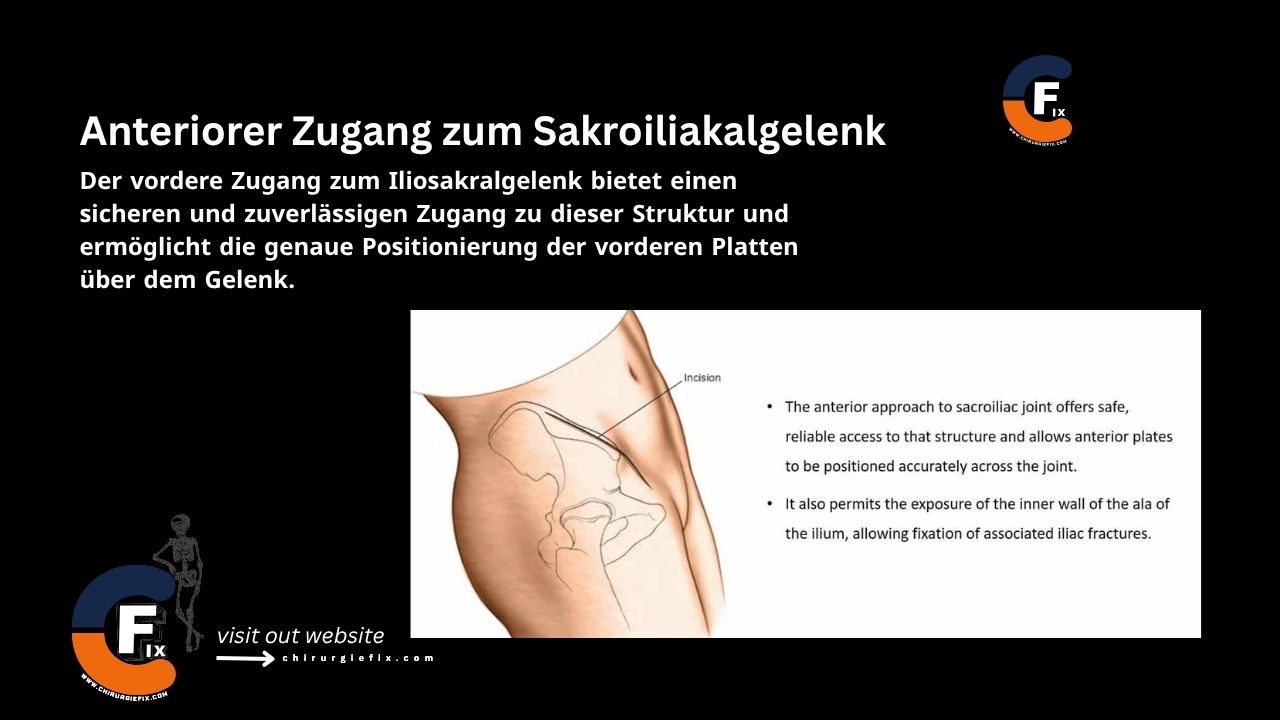
Incision

  • The length of the incision depends on the amount of bone graft required.
  • For extensive bone grafting, make an 8 cm incision parallel to the iliac crest, centered over the iliac tubercle.

Internervous Plane

The iliac crest provides a true internervous plane because muscles either originate from or insert onto the crest but do not cross it. The tensor fasciae latae, gluteus minimus, and gluteus medius muscles are most affected by grafts from the anterior part of the crest, as they arise from the outer surface of the ilium and are supplied by the superior gluteal nerve. The abdominal muscles originate directly from the iliac crest and have segmental innervation.

Superficial Dissection

  • Retract the skin and identify the iliac crest. Incise down to the crest with a scalpel.
  • In children, the apophysis may still be present and avascular. If so, incise it and use a Cobb elevator to strip the muscle through the apophysis in both directions.
  • In adults, no apophysis is present.
  • Be careful not to extend the incision from the apophysis or iliac crest all the way to the anterior superior iliac spine. Doing so can detach the origin of the inguinal ligament, potentially leading to an inguinal hernia.

Deep Dissection

  • Muscles can be stripped from either the inner or outer table of the ilium.
  • First, incise down to the bone with a scalpel.
  • Follow the contour of the bone, staying firmly on it.
  • Once around the corner of the crest onto the ilium, continue the dissection with a blunt instrument like a Cobb elevator.
  • The muscles will strip easily from the bone.
  • Alternatively, insert a swab into the plane between the iliac blade and the overlying muscles.
  • Using a blunt instrument, gradually advance more of the swab into this plane.
  • The swab acts as a tissue expander, pushing the muscle away from the bone while protecting the soft tissue.

Approach Extension

The anterior approach to the iliac crest is not a classic extensile approach. This section describes the approach only as a means for harvesting a bone graft.

Dangers

Structures at risk during the anterior approach to the iliac crest include:

  1. To preserve the normal appearance of the pelvis, both the iliac crest and the anterior superior iliac spine should remain intact.
  2. If the anterior superior iliac spine is used as graft material, retraction of the inguinal ligament can occur, leading to an inguinal hernia.

References

  • Book: “Surgical Exposures in Orthopaedics” – 4th Edition
  • Campbell’s Operative Orthopaedics, 12th Edition

Still to read...