A carpometacarpal (CMC) joint injection is used to treat acute or chronic capsulitis or osteoarthritis of the CMC joint. This guide covers the necessary equipment, relevant anatomy, and the injection technique itself.
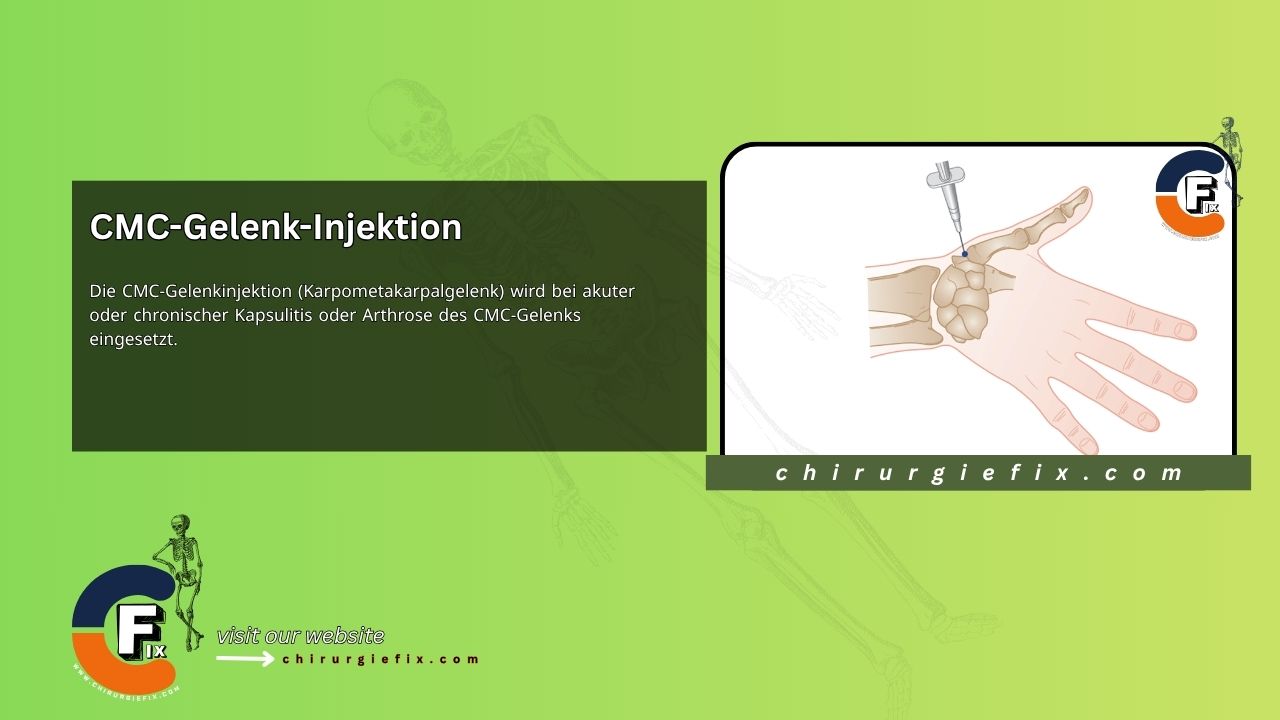
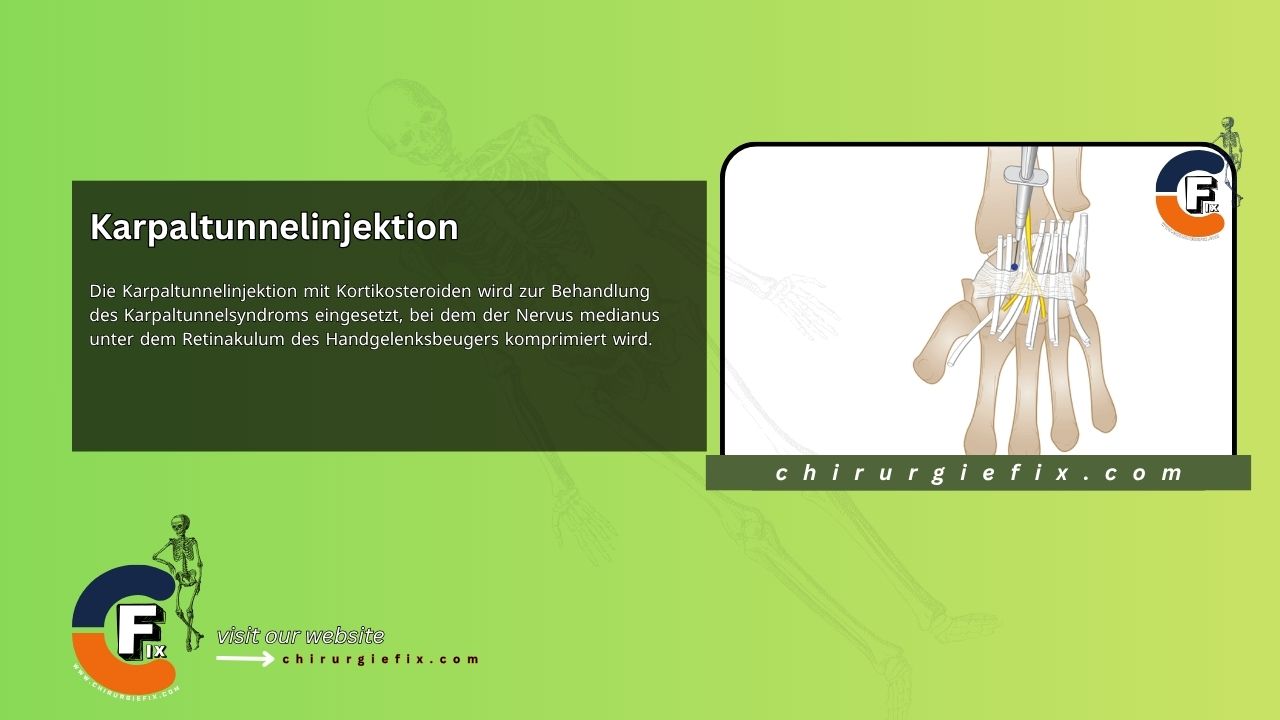
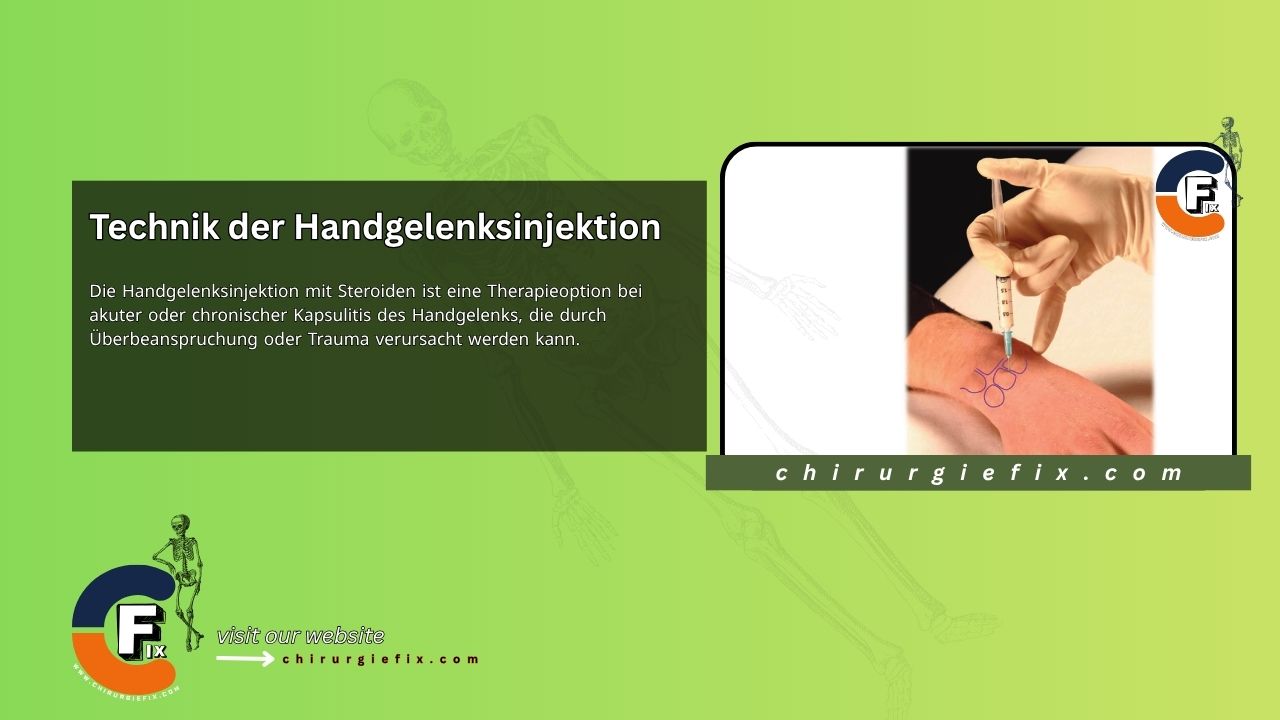
The first metacarpal bone articulates with the trapezium. The simplest entry point is located at the tip of the anatomical snuffbox on the dorsal wrist.
Identify the joint line by passively flexing and extending the thumb while palpating the joint space between the two bones. Mark the entry point slightly more proximal to account for the rounded shape of the metacarpal base.
Note that the radial artery lies at the base of the anatomical snuffbox. The distal thumb joint and all finger joints can be best infiltrated from the medial or lateral side at the joint line with the finger slightly flexed.
Tape the thumb using a spica technique, or tape two fingers together to splint them for a few days. The patient then begins gentle active and passive mobilization exercises within the pain-free range and is advised to avoid overuse of the thumb or fingers. Dipping the fingers into warm wax baths and using the wax ball as an exercise tool can be helpful.
Ultrasound can be used to perform precise intra-articular CMC joint injections. It offers a viable alternative to fluoroscopy when accurate injection into the CMC joint is required for diagnostic or therapeutic purposes.
Capsulitis of the trapeziometacarpal joint is a common lesion in older women, and the results of infiltration are consistently excellent. Often, several years pass before a repeat injection is needed, provided the patient does not significantly overuse the joint.
Infiltrating the thumb and finger joints can be difficult because osteophytes are almost certainly present. Sometimes, it is necessary to anesthetize the capsule with a small amount of solution while trying to enter the joint. It also helps to gap the side of the joint being entered, and an even finer needle, such as a 30-gauge needle, may be used.
First carpometacarpal and scaphotrapezotrapezoidal (STT) osteoarthritis of the thumb can occur simultaneously, with tenderness at the proximal joint line. If you are unsure of the primary pain source, inject the more distal joint first to avoid confusion from possible anesthetic blockade of surrounding cutaneous nerves during CMC joint injection.