The anterior approach to the humeral shaft is a surgical technique used to address several conditions of the upper arm. This approach provides excellent access for a variety of procedures.
This approach is commonly indicated for:
Position the patient supine on the operating table. Place the affected arm on an arm board and abduct it to approximately 60 degrees.
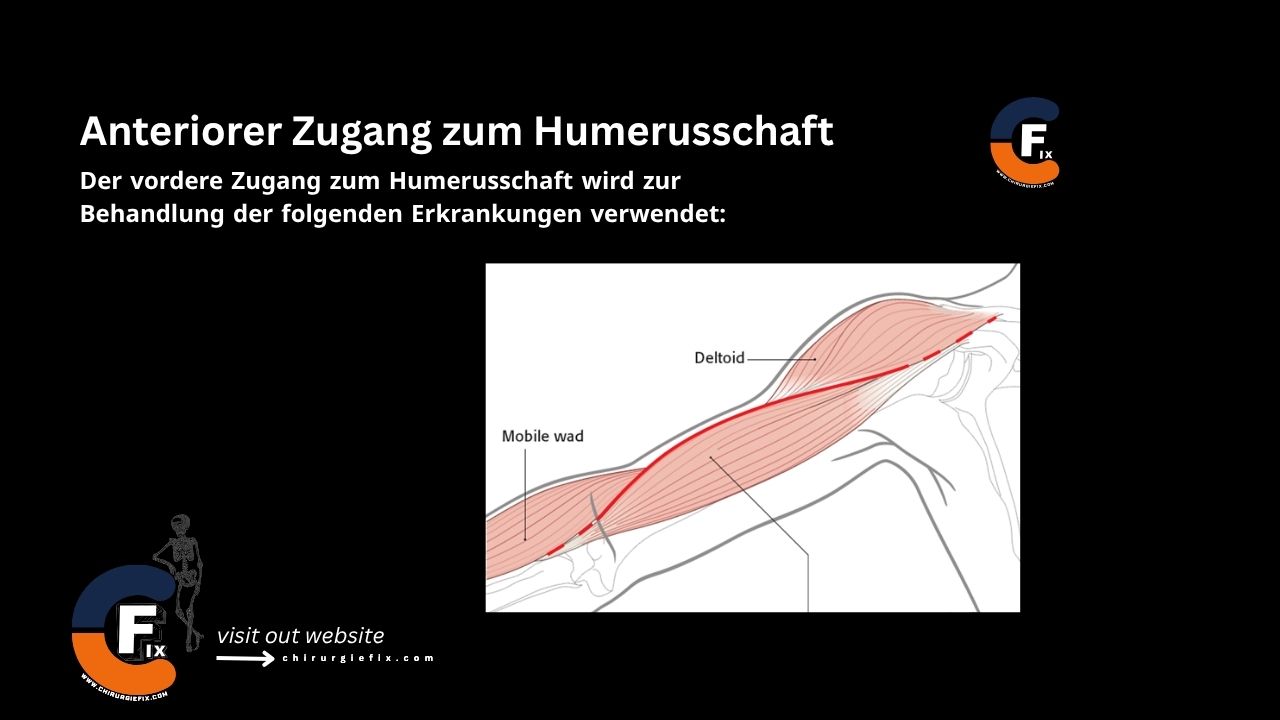
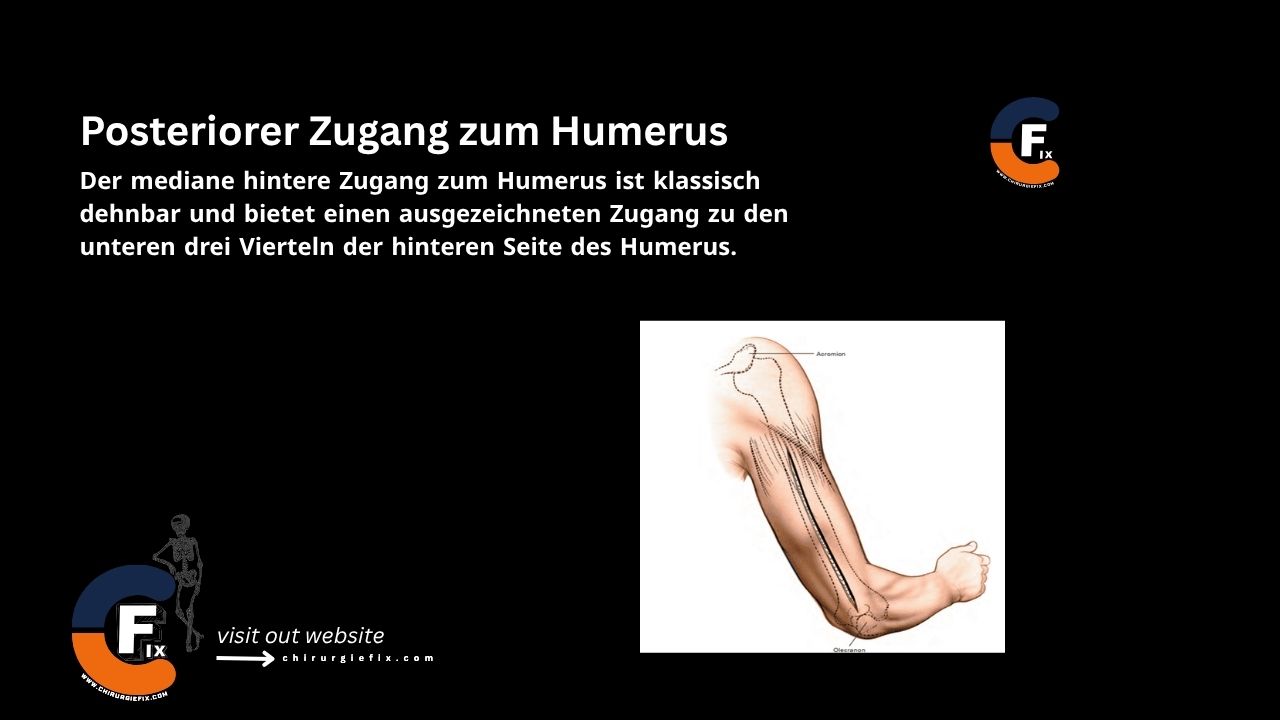
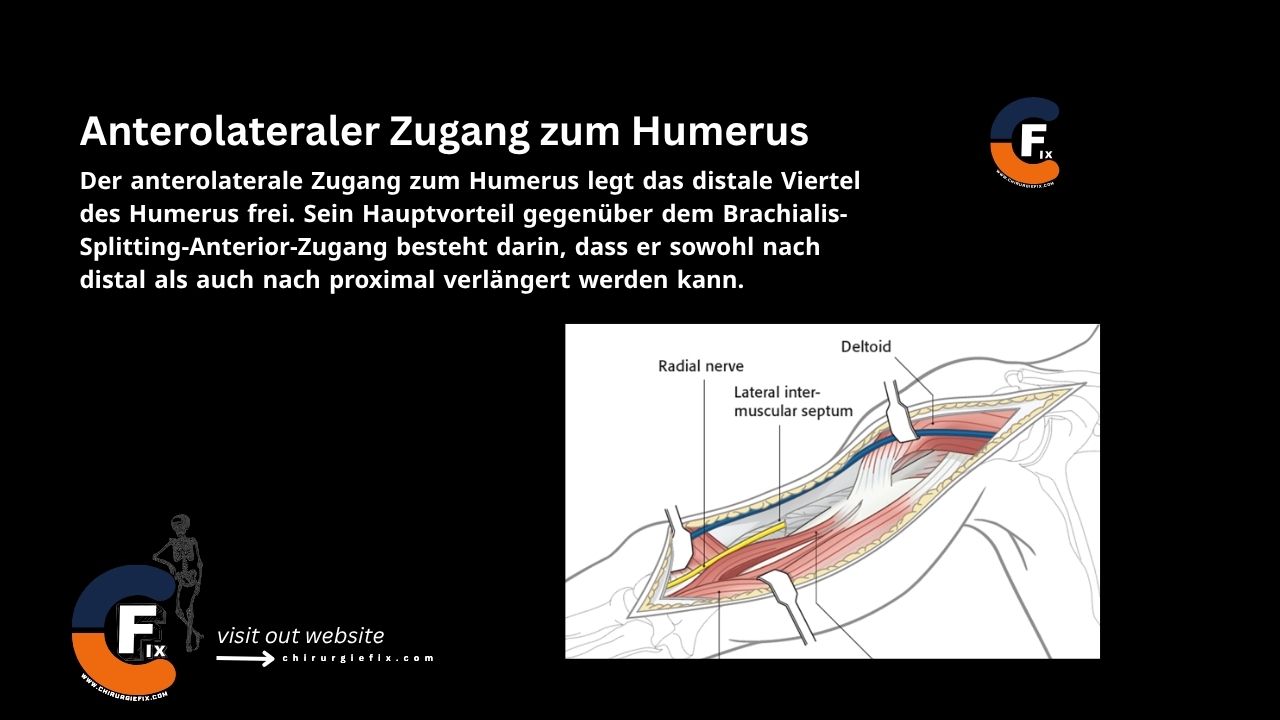
Make a curved incision starting at the tip of the coracoid process. Extend it distally in line with the deltopectoral groove, along the lateral side of the humerus. Stop the incision approximately 5 cm above the elbow flexion crease, as the lateral antebrachial cutaneous nerve is at risk in this area.
The internervous plane for the proximal aspect of this approach lies between:
The internervous plane for the distal aspect lies between:
Identify the cephalic vein; it can be retracted either medially or laterally.
Proximally, develop the interval between the deltoid and pectoralis major muscles.
Distally, incise the deep fascia of the arm along the line of the skin incision.
Identify the interval between the biceps brachii and brachialis muscles. The biceps muscle can be retracted medially or laterally, though medial retraction is more common.
Proximally, incise the periosteum lateral to the insertion of the pectoralis major tendon, staying lateral to the long head of the biceps tendon. The anterior humeral circumflex artery will be encountered here and requires ligation.
Distally, split the fibers of the brachialis muscle longitudinally along the midline to expose the periosteum and the humeral shaft.
Because this approach utilizes the deltopectoral interval, its proximal end can be easily converted into an anterior approach to the shoulder (the deltopectoral approach).
The anterior approach to the humeral shaft cannot be extended distally.