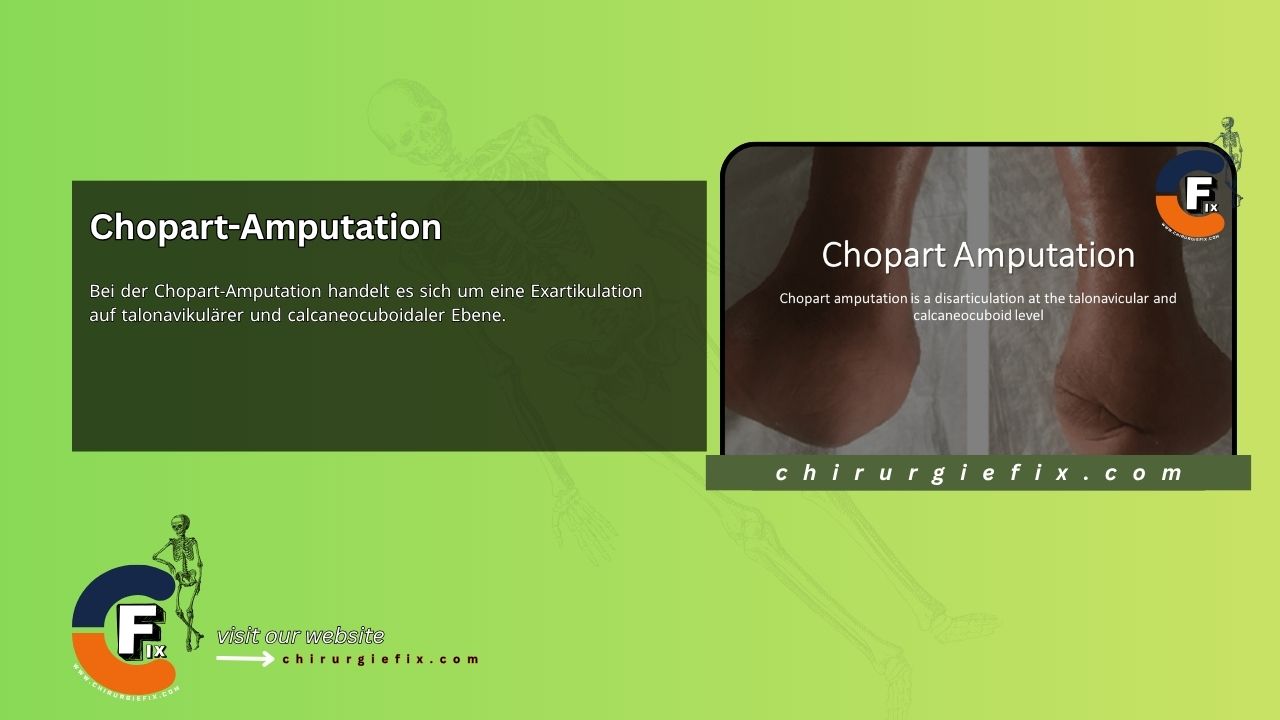
Chopart amputation is a surgical procedure involving disarticulation at the talonavicular and calcaneocuboid joints. This technique offers significant advantages over below-knee amputation, including better walking ability thanks to preserved limb length. Patients can also walk short distances without a prosthesis because direct weight-bearing on the residual limb is possible.
A modified Chopart amputation was developed to overcome complications of the traditional procedure, such as plantarflexion and skin damage over the anterior talus and calcaneus. The modifications include:
A systematic review study concludes that the need for re-amputation due to wound healing issues appears to be common, especially after conventional Chopart amputation. When considering a Chopart amputation, the modified technique shows a trend toward better outcomes in terms of wound healing and re-amputation rates compared to the traditional approach. Although the total number of patients studied is small, the Lisfranc amputation seems to favor both forms of Chopart amputation. With Lisfranc and both Chopart procedures, patients gain a functional stump with the remaining ability to walk short distances without a prosthesis.