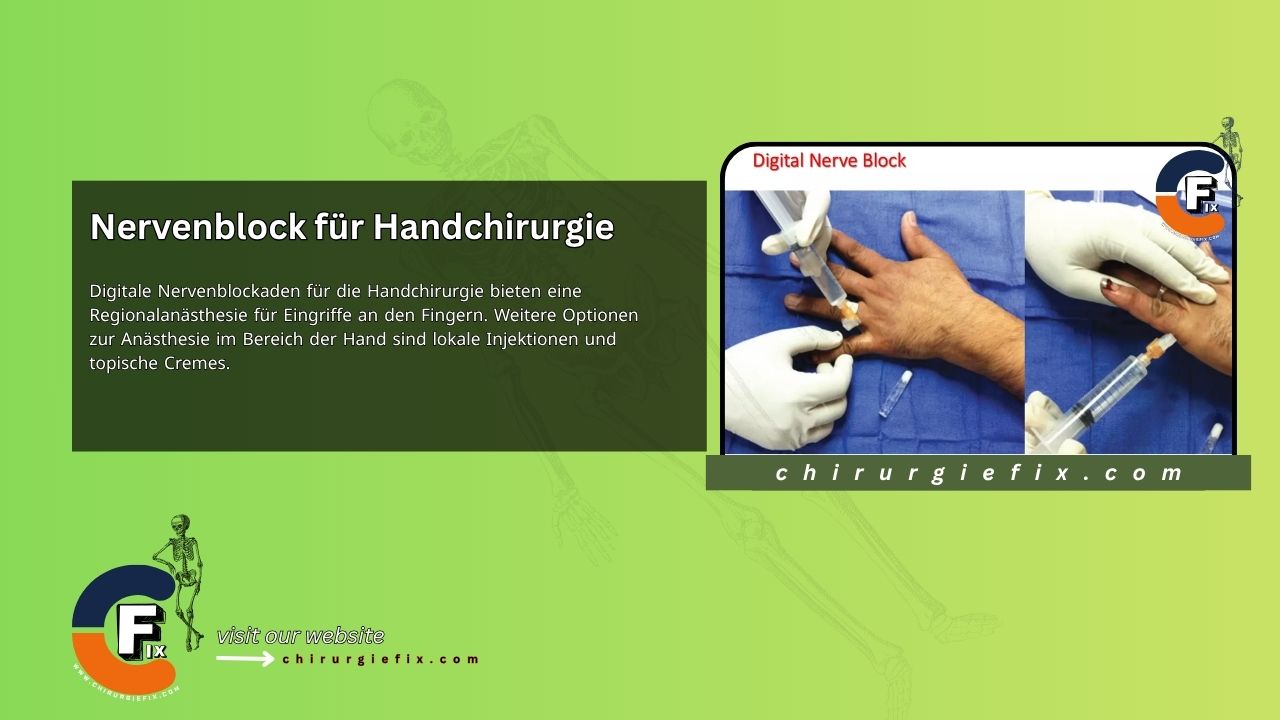
A nerve block for wrist surgery can be performed instead of a digital block when anesthesia is needed in a specific nerve distribution.
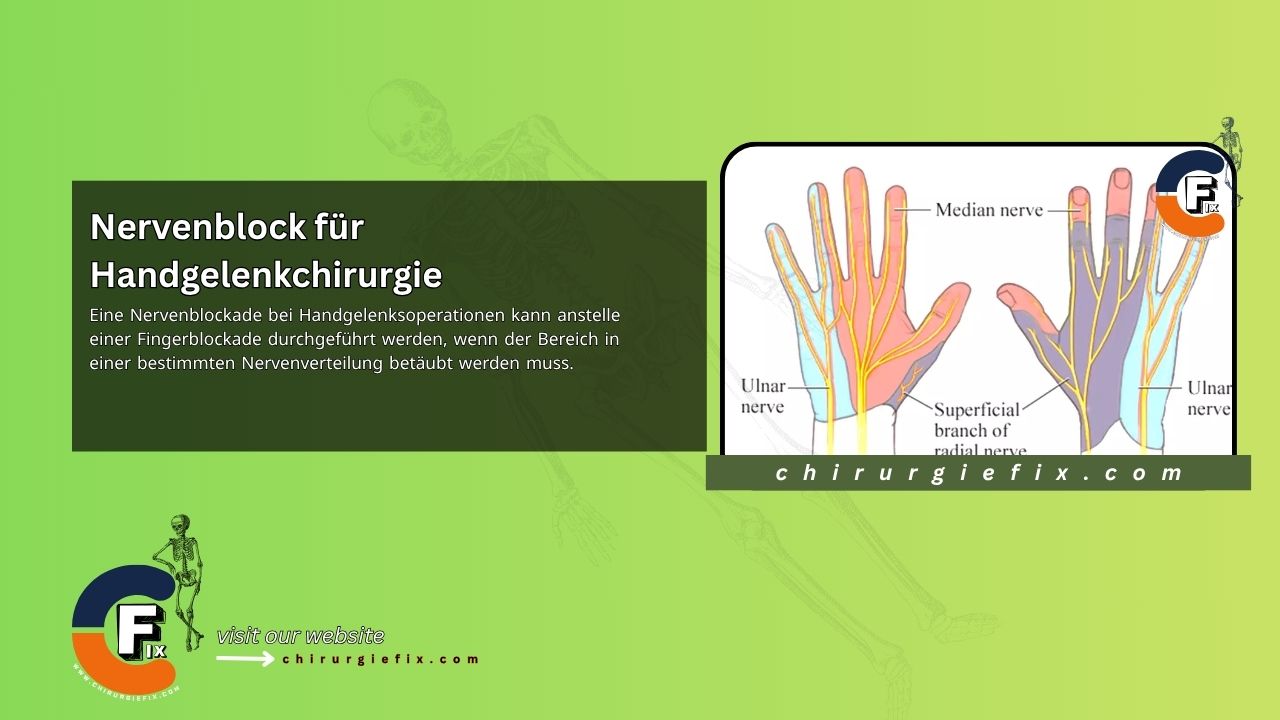
The three nerves that pass through the wrist—the ulnar, median, and radial nerves—play a key role in nerve blocks around the hand.
The ulnar nerve travels through Guyon’s canal, which is formed by the pisiform and hamate bones, along with the pisohamate ligament. The canal begins at the proximal end of the transverse carpal ligament and ends at the aponeurotic arch of the hypothenar muscles. This nerve provides sensation to the little finger and the ulnar side of the ring finger, and supplies motor function to the intrinsic muscles.
The dorsal branch of the ulnar nerve arises 5 to 8 cm proximal to Guyon’s canal and courses in a dorsal-ulnar direction. It supplies sensation to the dorsal-ulnar side of the hand and the medial 1.5 fingers up to the level of the MP joint.
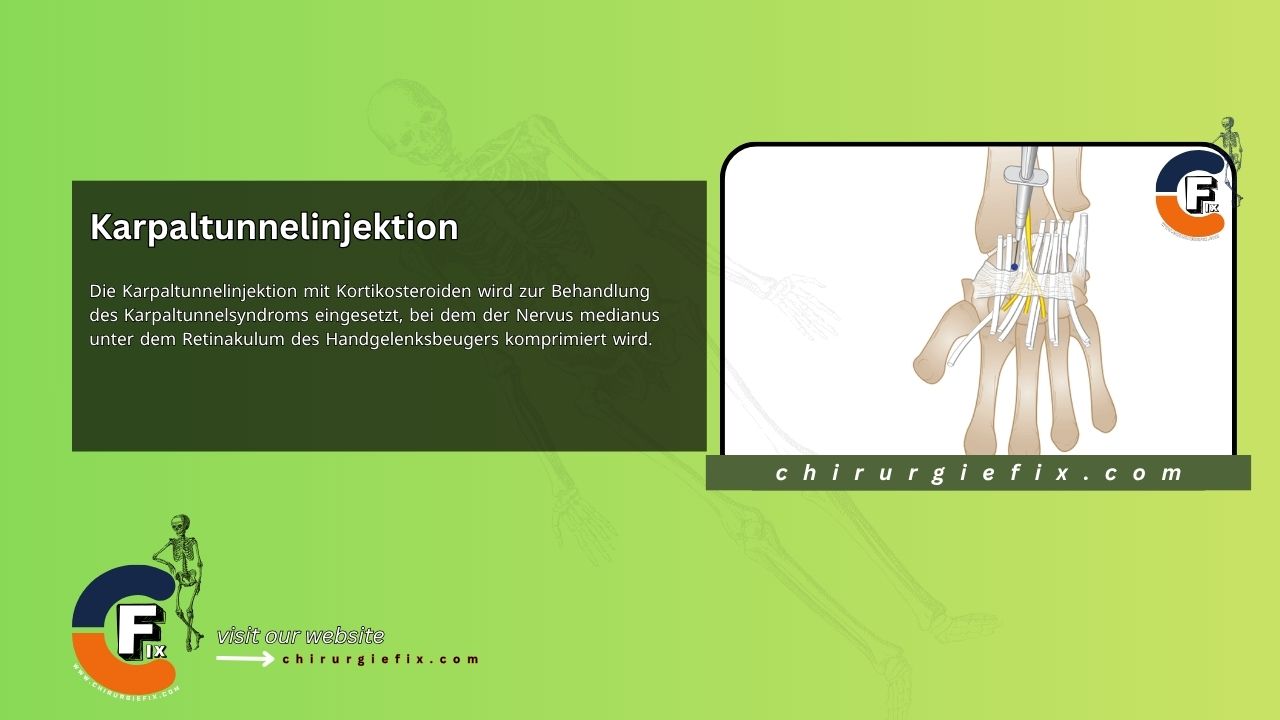
The median nerve runs through the carpal tunnel, which lies deep to the palmaris longus muscle. It is bordered proximally by the pisiform and scaphoid tubercle; distally by the hook of the hamate and trapezium tubercle; laterally by the scaphoid and trapezium; medially by the hamate and pisiform; and superiorly by the transverse carpal ligament. The median nerve provides sensation to the palmar aspect of 3.5 fingers and the thenar eminence (the terminal branches of the lateral antebrachial cutaneous nerve may also provide sensory coverage distally to the thenar crease).
The palmar cutaneous branch of the median nerve arises 5 to 8 cm proximal to the carpal canal and supplies sensation to the palm skin up to the level of the MP joint.
The superficial branch of the radial nerve wraps around the distal part of the radius toward the dorsum of the hand. It provides sensation to the dorsal-radial side of the hand and the dorsum of the lateral three fingers up to the MCP joints.
Indications for a nerve block during wrist surgery include:
Contraindications for digital nerve blocks include:
Indications for median nerve blocks include:
Indications for ulnar nerve blocks include:
Radial nerve blocks are used for lacerations on the thumb and dorsum of the hand.
For any technique, thoroughly prepare the area to be injected or sutured with alcohol, iodine, or chlorhexidine before the injection.
A study comparing bupivacaine with lidocaine for wrist block anesthesia concluded that bupivacaine, when used in clinical concentrations, is not associated with an increased incidence of neural complications.
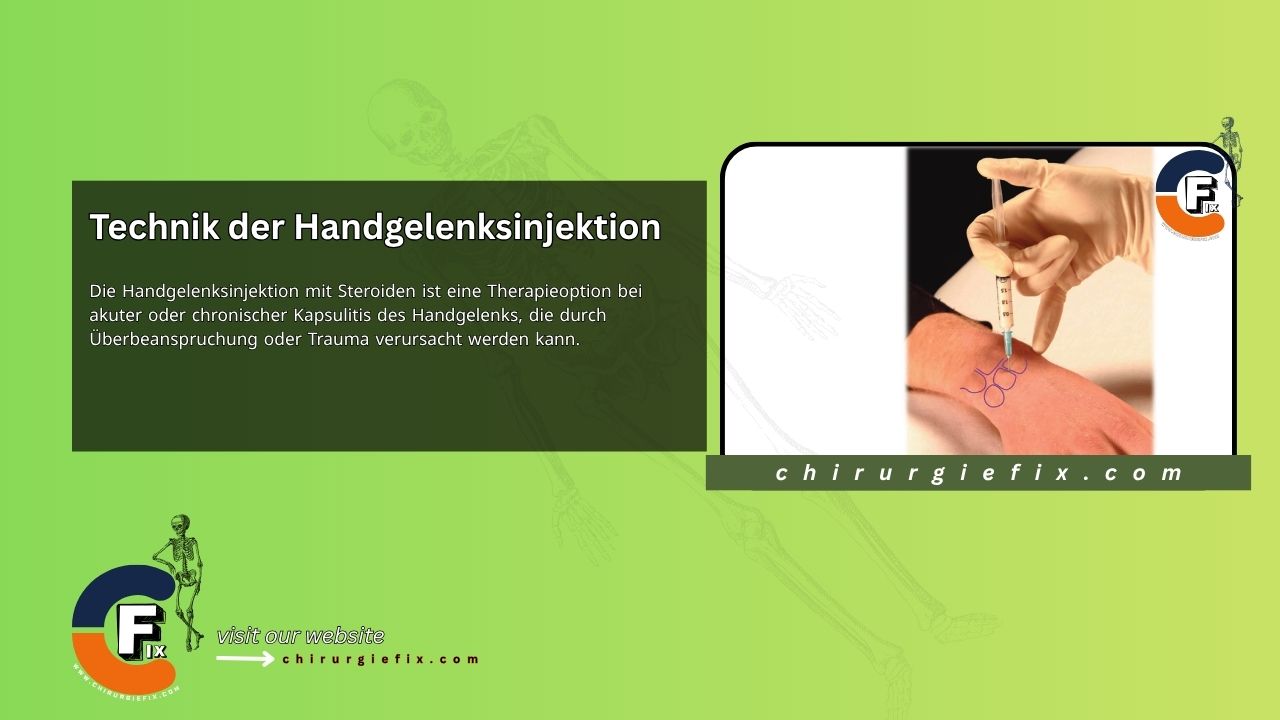
Supinate the forearm and place it on a sterile drape. Insert the needle between the tendons of the palmaris longus and flexor carpi radialis muscles, approximately 2 cm proximal to the wrist flexion crease. The needle should be inserted at a 45° angle and advanced about 1.5 cm into the underlying tissue.
Begin slowly injecting 5 to 7 ml of anesthetic into the area. If the patient immediately feels an electric sensation, this may indicate the needle has entered the nerve. Withdraw the needle slightly and continue. Direct injection into the nerve is painful and should be avoided.
The final 3 ml of anesthetic can be injected into the subcutaneous tissue in a radial direction from the palmaris longus muscle, directly radial to the flexor carpi radialis muscle. This anesthetizes the palmar cutaneous portion of the median nerve and improves block quality for procedures requiring a palmar skin incision (such as a nerve block for carpal tunnel release).
Supinate the hand and place it on a sterile drape. Insert the needle 6 cm proximal to the wrist crease, and ulnar and dorsal to the flexor carpi ulnaris, advancing it transversely. If the needle is placed more distally, it may miss the dorsal branch of the ulnar nerve. This branch can be blocked with a subcutaneous wheal between the ulnar styloid and the pisiform bone on the ulnar side of the wrist.
Inject 8 to 10 ml of anesthetic.
Pronate the hand and place it on a sterile drape. Insert the needle 2 cm proximal to the tip of the radial styloid, along the radial side of the distal forearm. Inject 7 to 10 ml of anesthetic along the radial and dorsal side of the wrist and distal forearm, between the first and third dorsal compartments (the tendons of the abductor pollicis longus, extensor pollicis brevis, and extensor pollicis longus muscles).