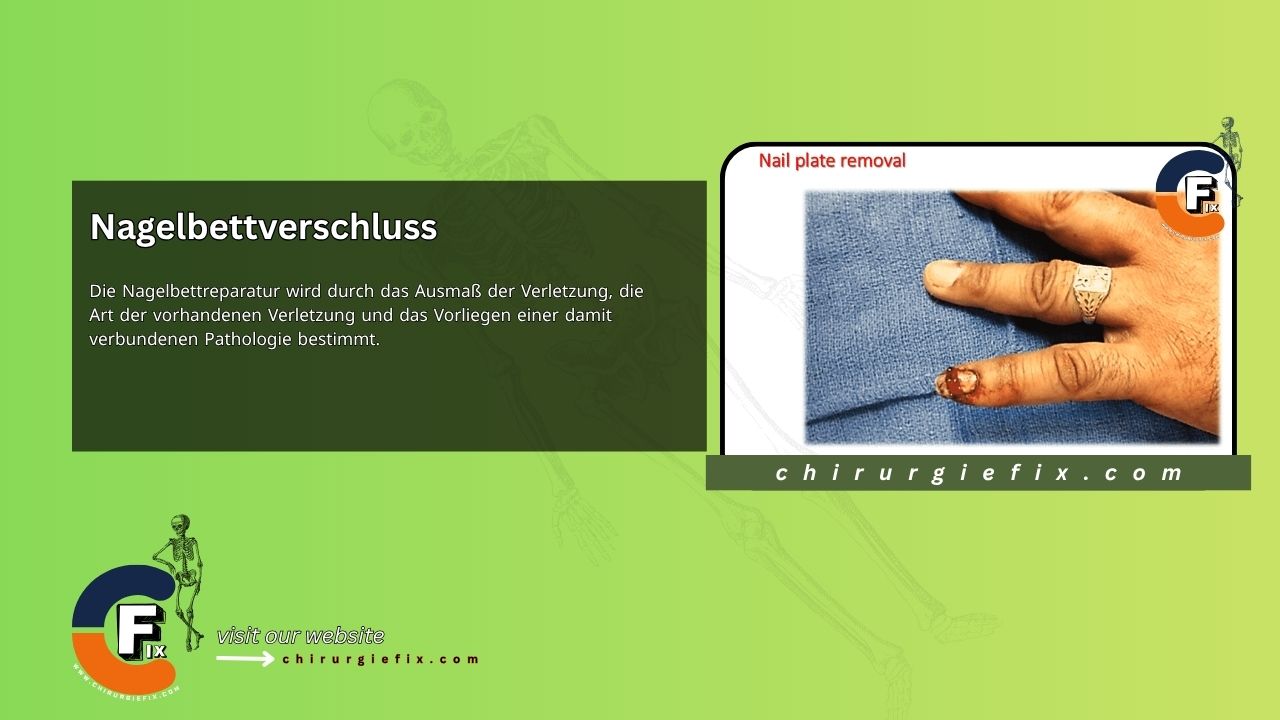
The approach to nail bed repair depends on the extent of the injury, the type of wound present, and any associated pathology.
Small subungual hematomas that involve less than 25% of the nail bed can be managed with observation or trephination if the area is painful. For hematomas covering more than 25% of the nail bed, it is recommended to remove the nail plate so the nail bed can be examined and any lacerations repaired. Simple or stellate (star-shaped) nail bed lacerations can be treated with suture repair or with 2-octylcyanoacrylate (Dermabond).
The following materials are typically required for this procedure:
The patient lies supine with the affected hand palm-down on an arm extension or a small Mayo stand. The injured finger is irrigated generously with saline to remove debris from the nail area. It is then prepped with povidone-iodine solution, and the area is draped with a sterile extremity towel.
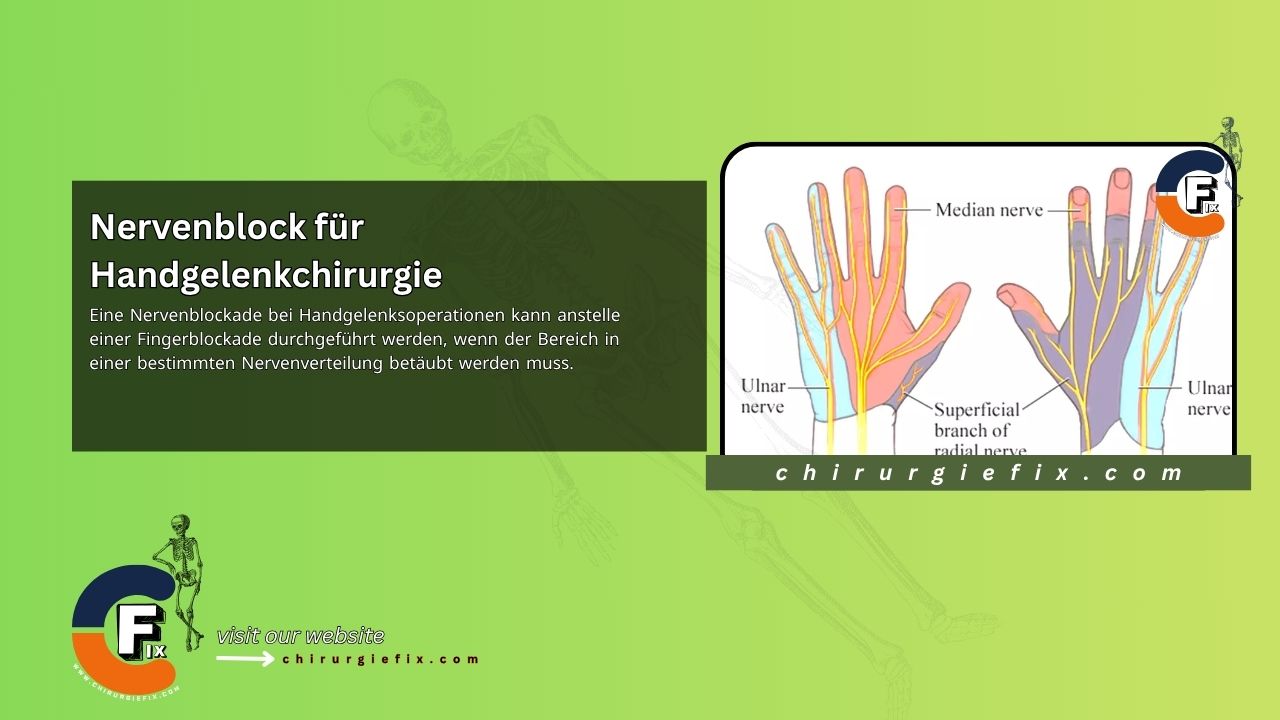
A digital nerve block is performed, making sure all four digital nerves supplying the injured finger are covered. A Penrose drain is then applied as a finger tourniquet, wrapping from distal to proximal and securing it at the base of the finger. The nail plate is then removed, and the type of nail bed laceration is assessed.