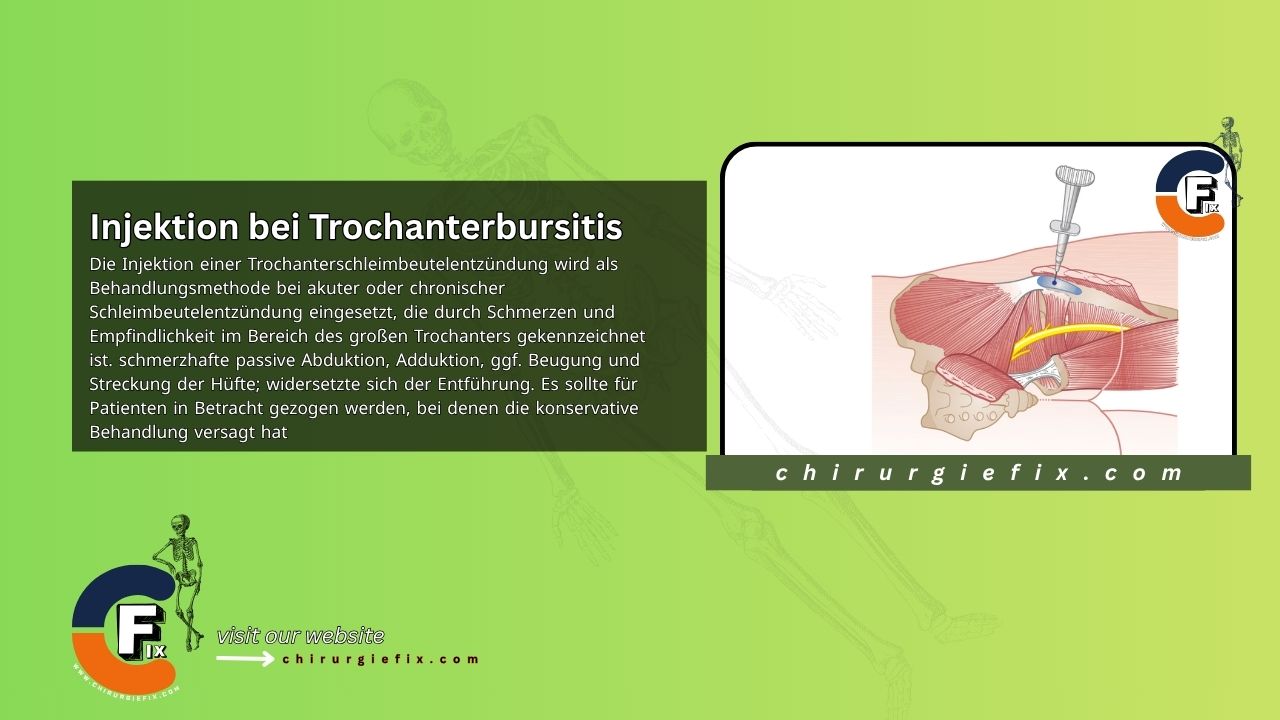
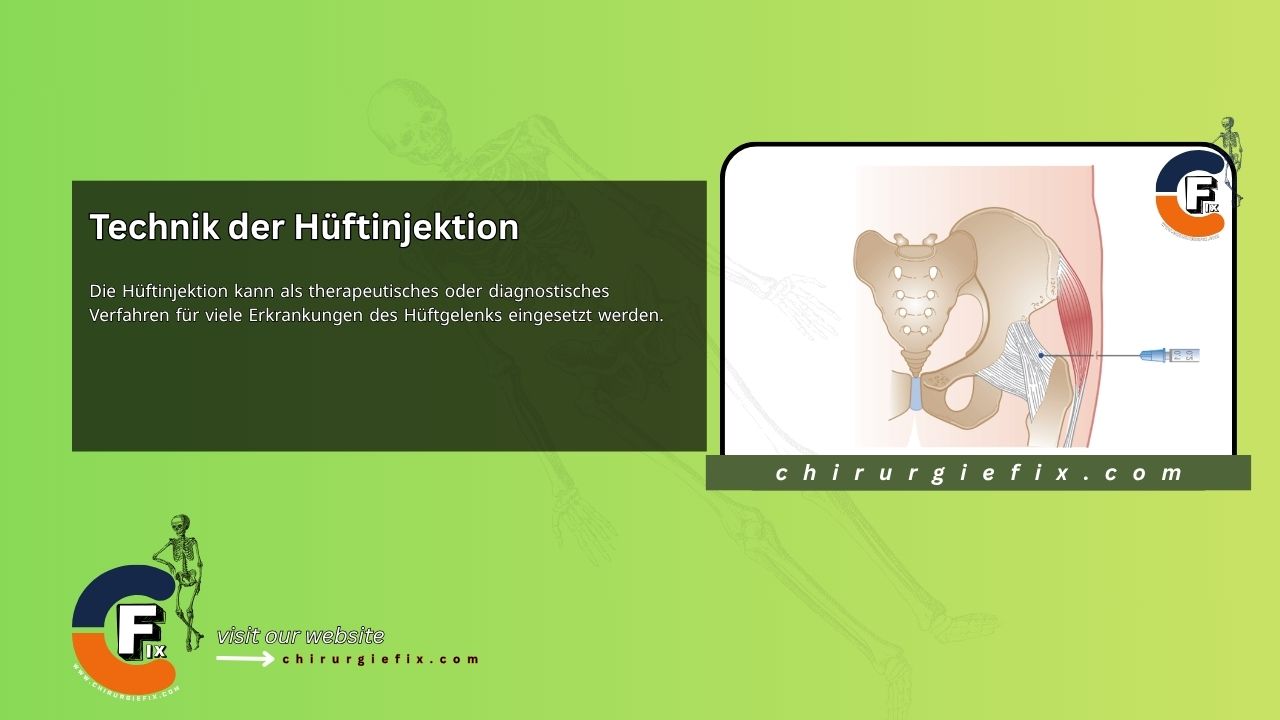
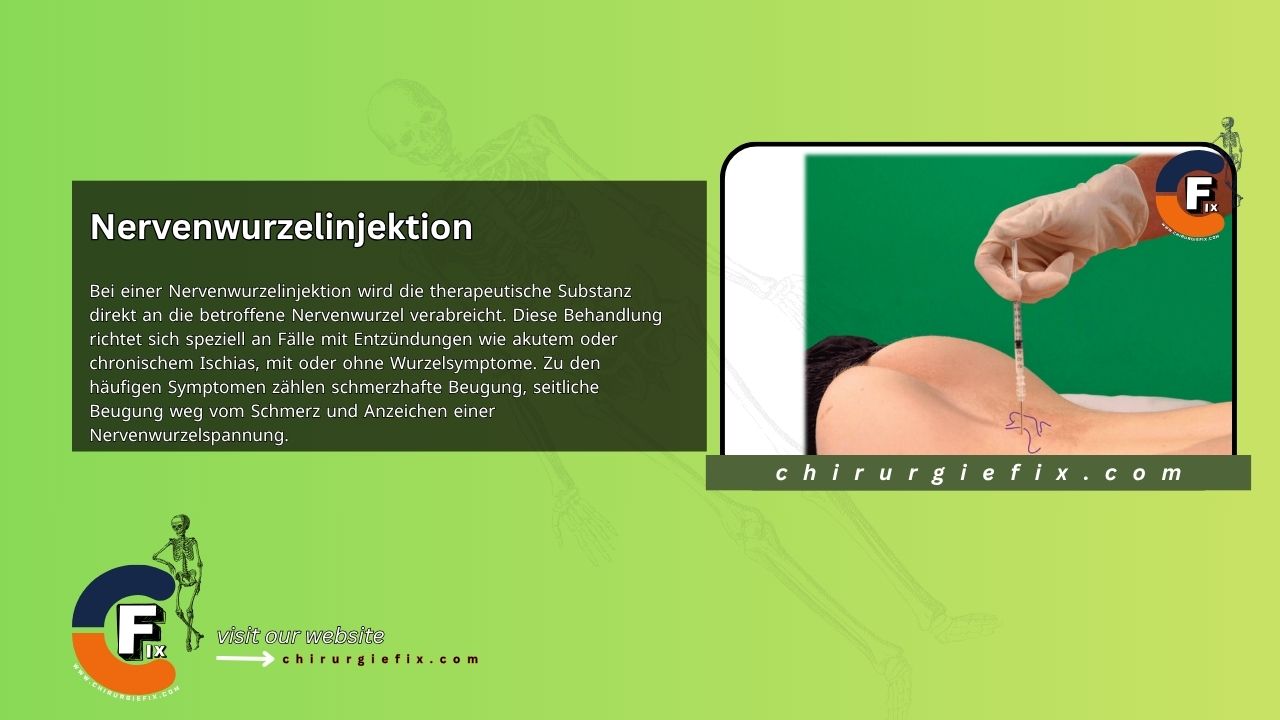
Injection for trochanteric bursitis is a treatment option for acute or chronic inflammation of the bursa. This condition is marked by pain and tenderness over the greater trochanter, along with painful passive hip abduction, adduction, and sometimes flexion and extension. Patients who have not responded to conservative treatment are typically considered for this procedure.
The trochanteric bursa sits over the greater trochanter of the femur. It is roughly the size of a golf ball and is usually tender to the touch.
The patient should avoid overuse until pain-free and gradually return to normal activity. In thin, older patients, sleeping on the same side on a hard mattress may be the cause. The trochanter can be padded with a large ring of adhesive felt, and changing sleeping positions is encouraged. The mattress may also need to be replaced. Stretching the iliotibial band can be helpful.
A fall or direct blow to the trochanter can cause hemorrhagic bursitis. This requires immediate aspiration.
Severe pain over the trochanter with rapid onset and extreme tenderness to palpation may be caused by acute calcific bursitis, similar to that in the shoulder. This can be visible on X-ray and often responds very well to injection therapy.
In resistant or recurrent cases, consider imaging to rule out tears in the short rotator muscles of the hip.
Greater trochanteric bursitis is considered a self-limiting condition but can cause significant pain and functional limitation. While conservative treatment with NSAIDs, activity modification, physical therapy, and weight loss is often successful, corticosteroid injection for trochanteric bursitis is frequently performed to relieve pain and improve function.
Absolute contraindications include:
The risk of hemarthrosis is low, and anticoagulant medication can be continued unchanged. Laboratory testing for coagulation is not required. However, patients with a recent documented supratherapeutic International Normalised Ratio (INR) should postpone the procedure until the INR returns to therapeutic levels.