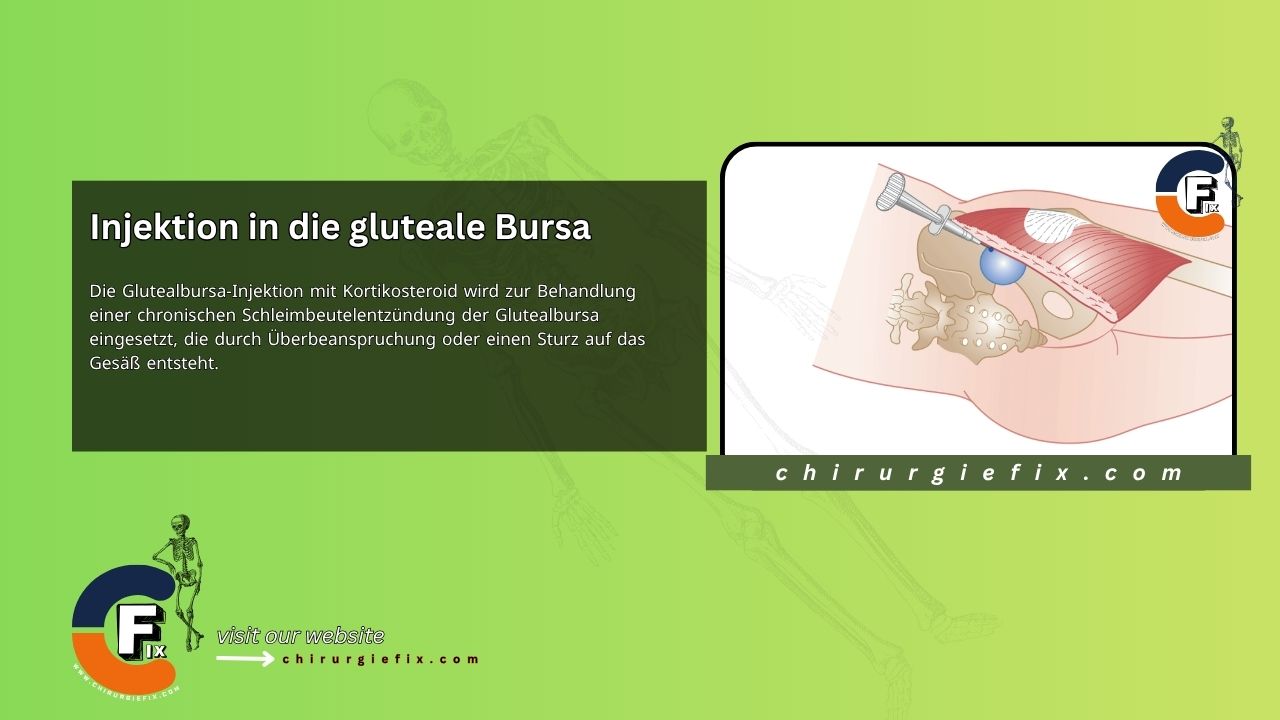
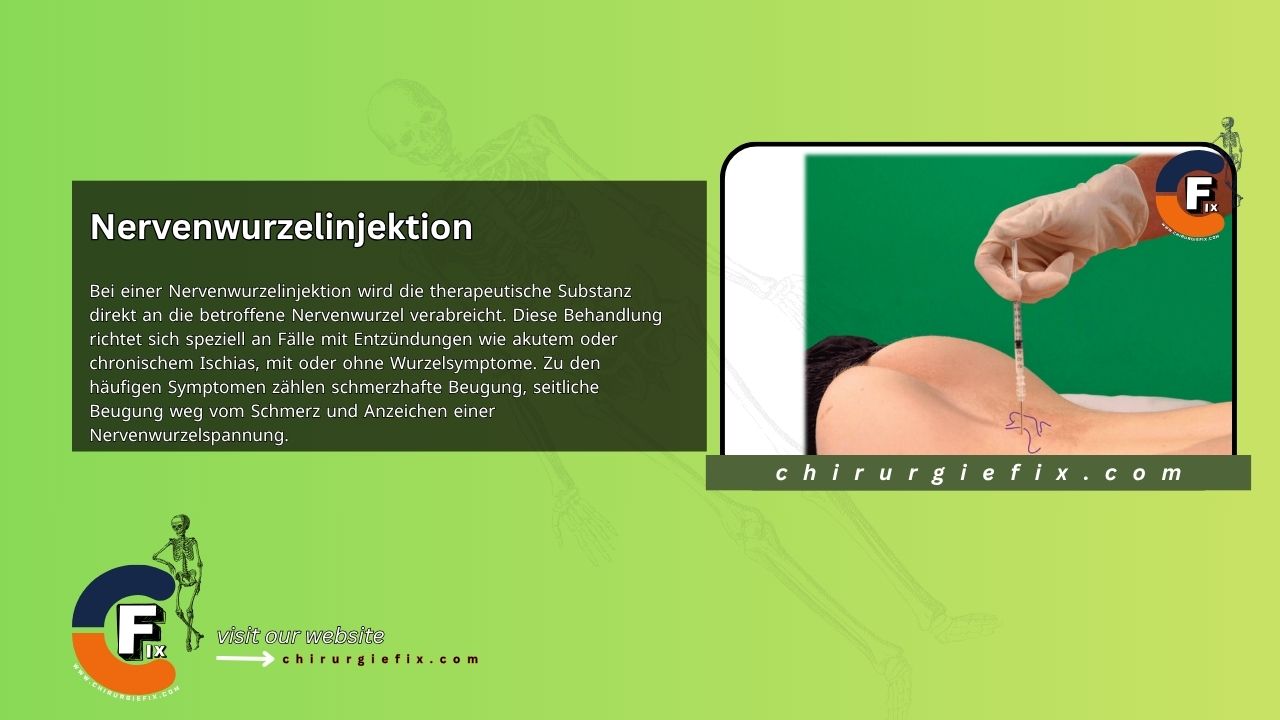
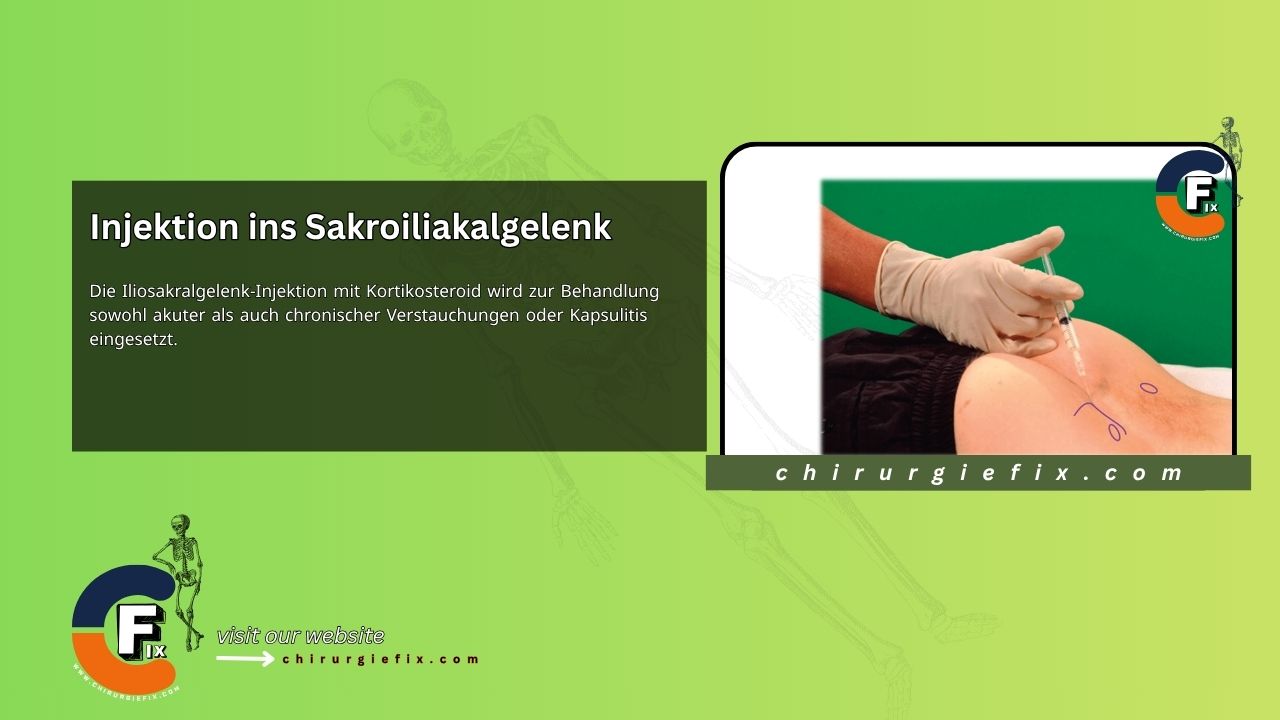
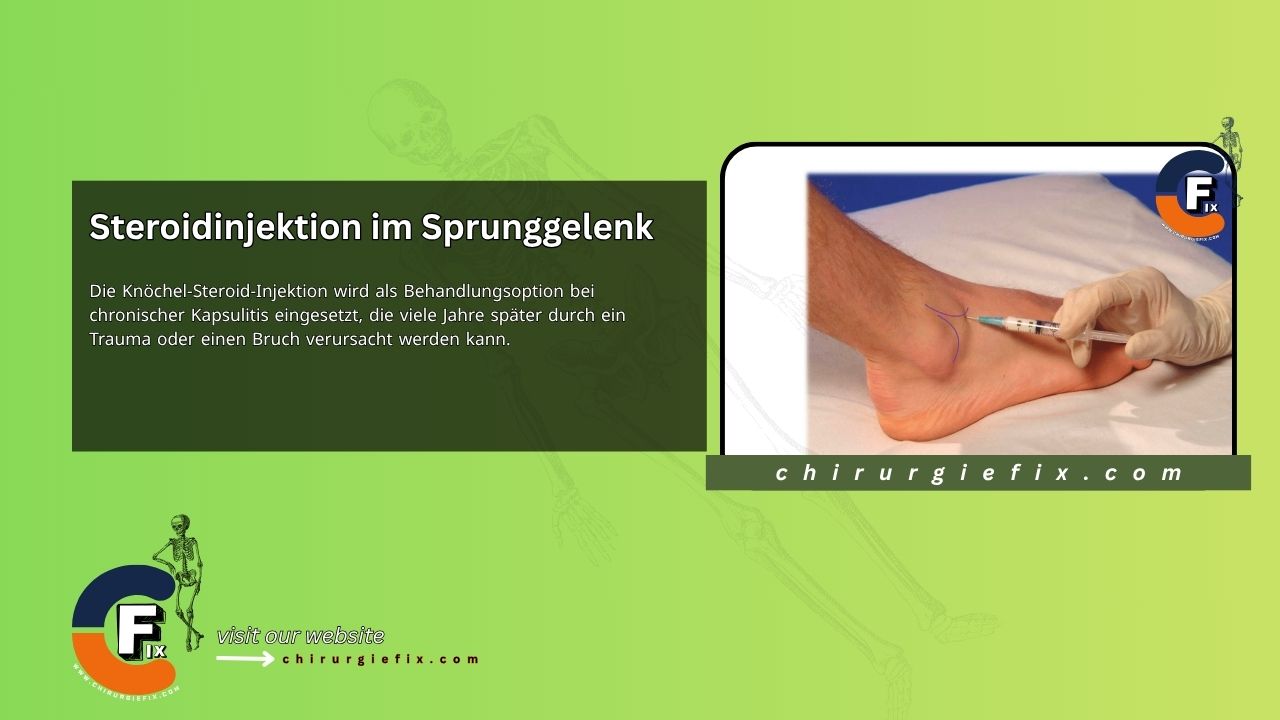
A corticosteroid injection into the gluteal bursa is used to treat chronic bursitis in this area. This condition is typically caused by overuse or a direct fall onto the buttocks.
Chronic gluteal bursitis is characterized by pain and tenderness in the upper outer quadrant of the buttock. Patients often experience pain with passive hip flexion, abduction, and adduction, as well as discomfort during resisted abduction and extension.
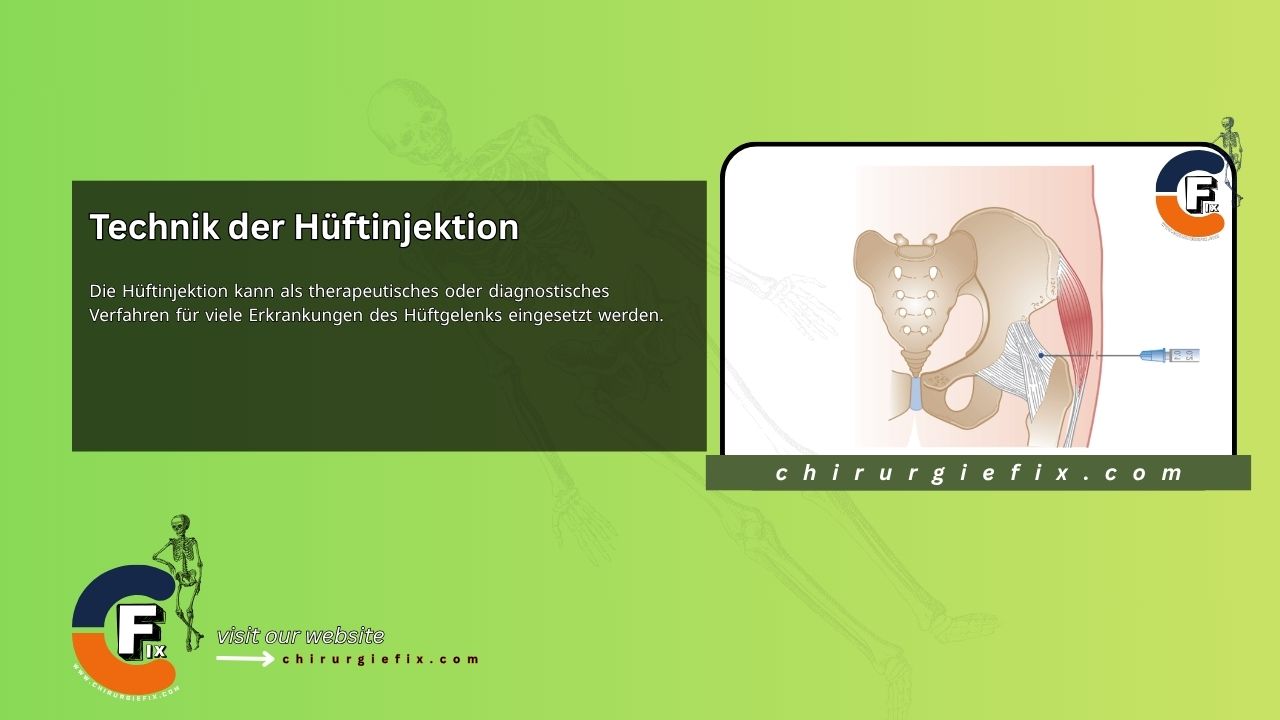
The bursae of the gluteal muscles vary in number, size, and shape. They can be located deep to the gluteal muscles on the ilium or between the layers of the three gluteal muscles. Needle placement is guided by palpating the center of the painful area. However, comparing tenderness between both sides is crucial, as this region is often sensitive to touch even in healthy individuals.
Since there are no major blood vessels or nerves in the bursal area, the injection is straightforward. The sensation of a loss of resistance under and within the gluteal muscles guides the physician in depositing the fluid. Pain originating from the lumbar spine or the sacroiliac joint can be mistaken for gluteal bursitis. The mere presence of tenderness in the middle of the buttock—which is normal in most people—should not be considered a diagnosis of bursitis.
For larger individuals, a longer spinal needle may be required.