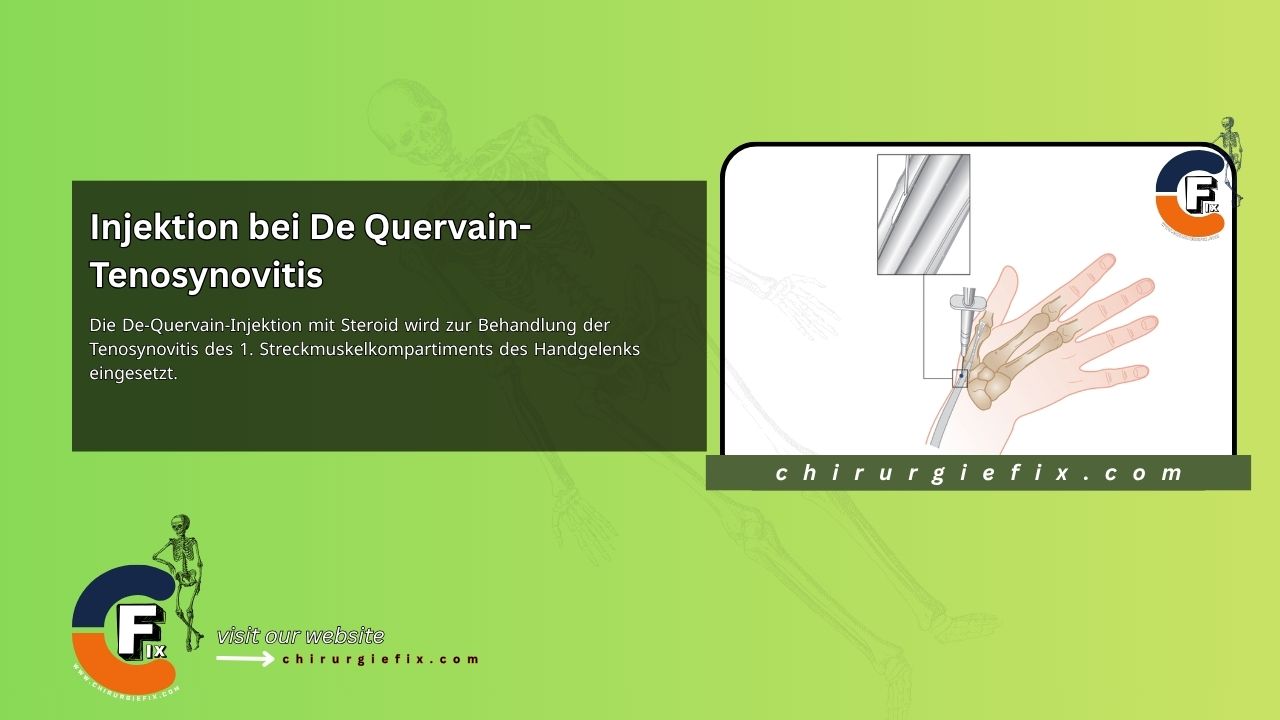
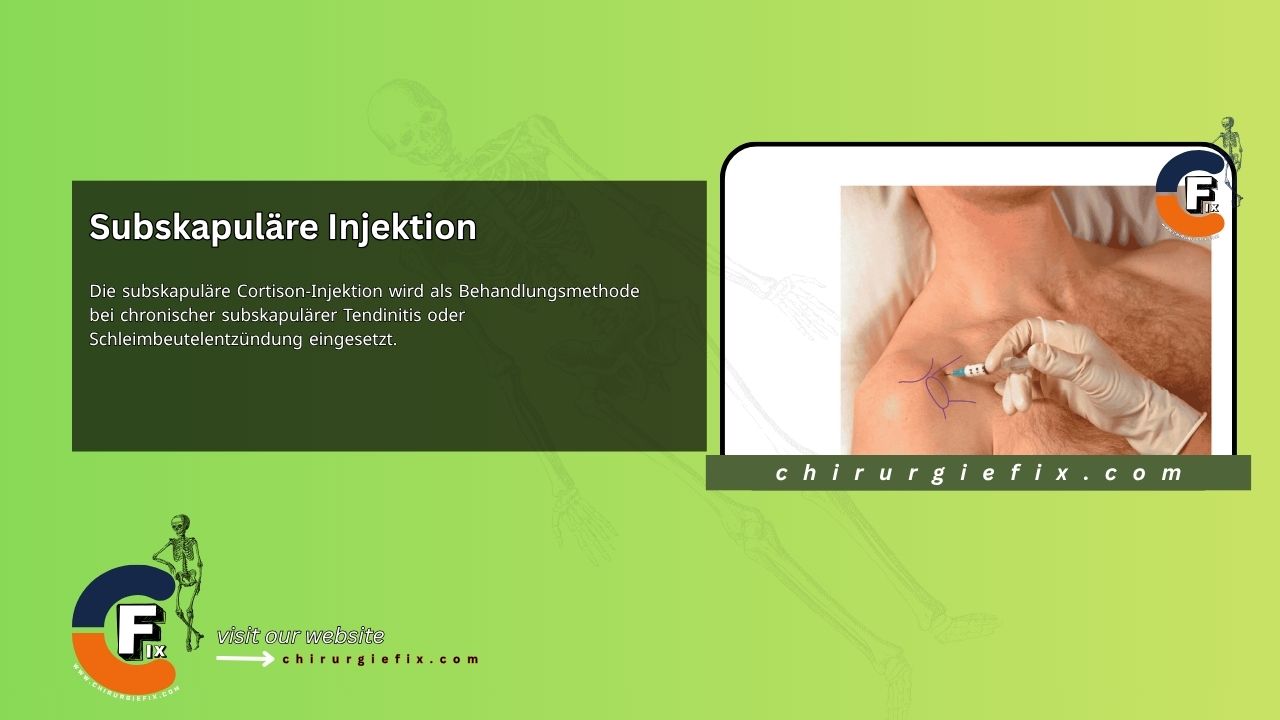
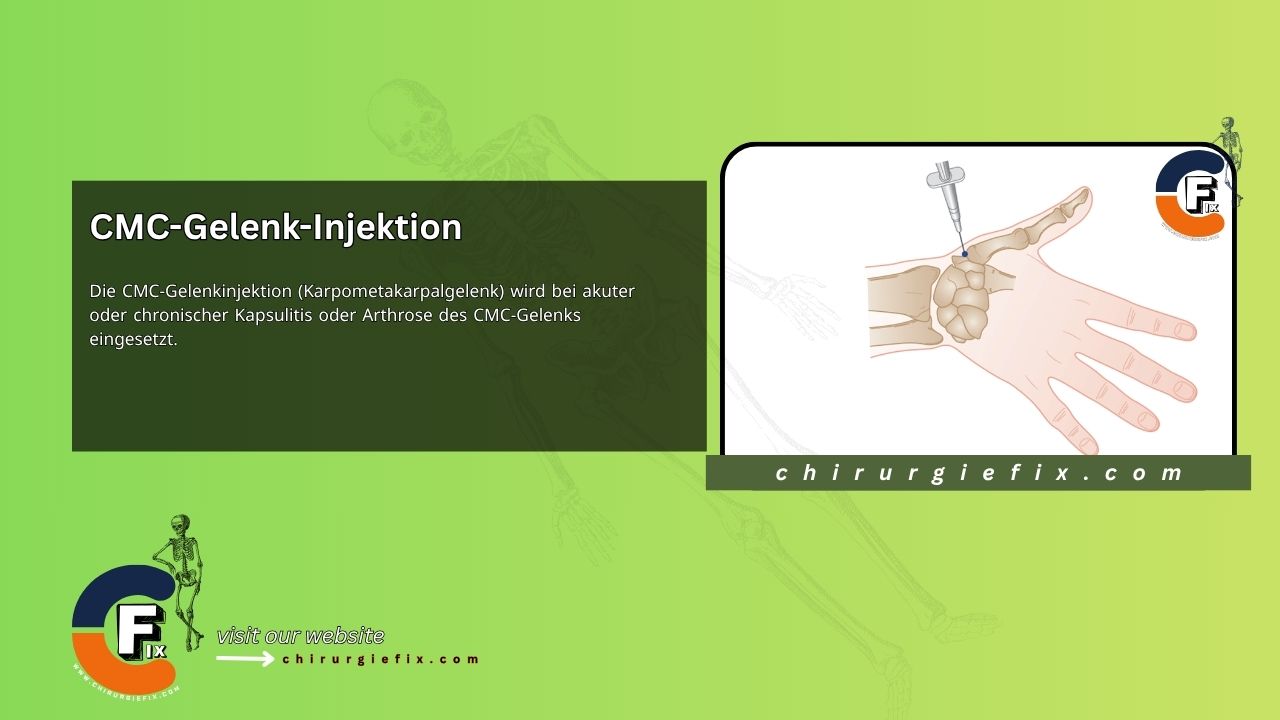
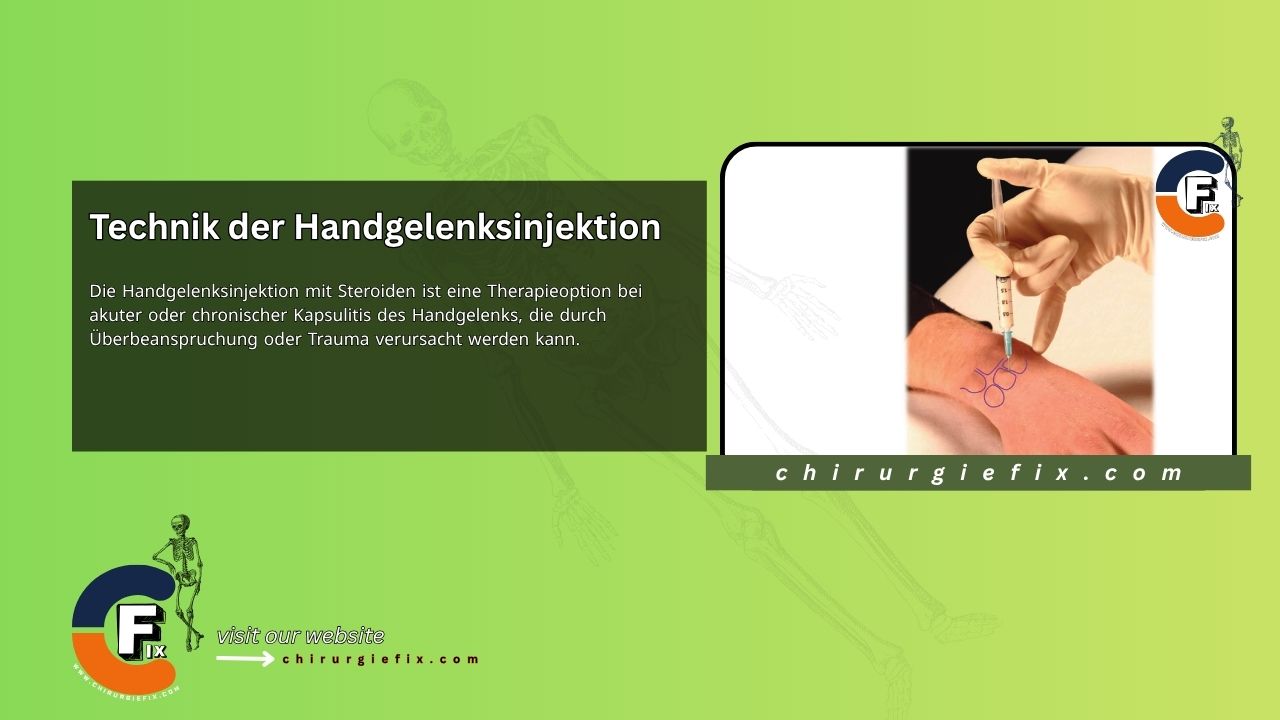
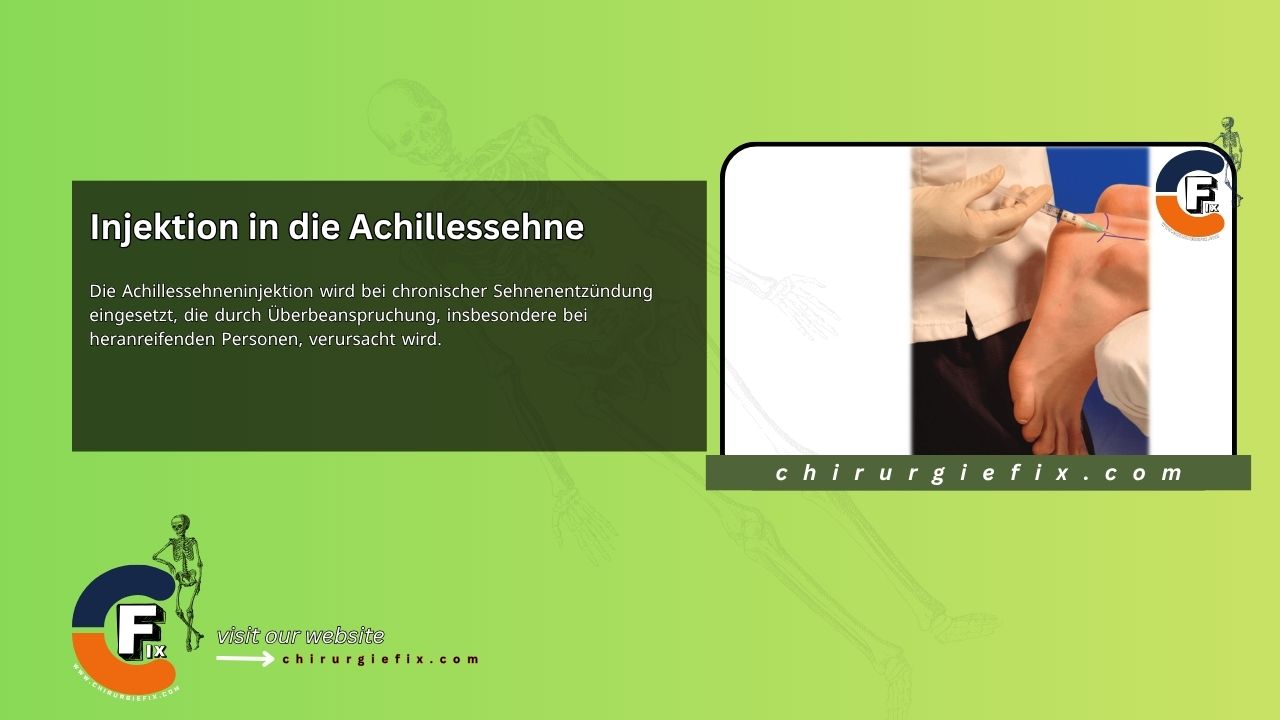
A steroid injection for De Quervain’s tenosynovitis is used to treat inflammation of the first extensor compartment of the wrist. This compartment contains the abductor pollicis longus (APL) and extensor pollicis brevis (EPB) tendons.
Symptoms of De Quervain’s tenosynovitis include pain at the base of the thumb and over the radial styloid process, occasional crepitus, and painful resistance to thumb abduction, extension, and passive flexion across the palm with the wrist in ulnar deviation (positive Finkelstein test).
The APL and EPB tendons typically run together within a single sheath on the radial side of the wrist. The radial styloid process is consistently tender, so it is important to compare with the pain-free side. These two tendons are often visible when the thumb is held in extension or can be palpated at the base of the first metacarpal. The goal of the injection is to slide the needle between the two tendons and deposit the solution inside the sheath.
The patient should rest the hand and may use tape to support the tendons. This is followed by avoiding or limiting the triggering activity and, if needed, a graduated muscle strengthening program.
Unless the wrist is significantly swollen, a small sausage-shaped swelling is often visible at the site where the solution inflates the tendon sheath. This is an area where depigmentation or subcutaneous fat atrophy can occur, particularly in thin women with darker skin. Although recovery is possible, the results can be permanent. Patients should be informed of this possibility before giving their consent. The potential risk can be minimized by using hydrocortisone for the injection.
One study found that injection alone is the best therapeutic approach for De Quervain’s tenosynovitis. They concluded that the cure rate with injection alone was 83%. This rate was much higher than with any other treatment modality (61% with injection and splinting, 14% with splinting alone, 0% with rest or NSAIDs).
In a double-blind, randomized controlled trial comparing the effects of ketorolac injections with triamcinolone acetonide injections for De Quervain’s tenosynovitis, they found that ketorolac injections resulted in less pain reduction, lower functional scores, and less grip strength improvement than triamcinolone injections in patients with radial styloid tenosynovitis. Future studies with larger groups and longer follow-up periods are needed to further clarify the effects of ketorolac.